
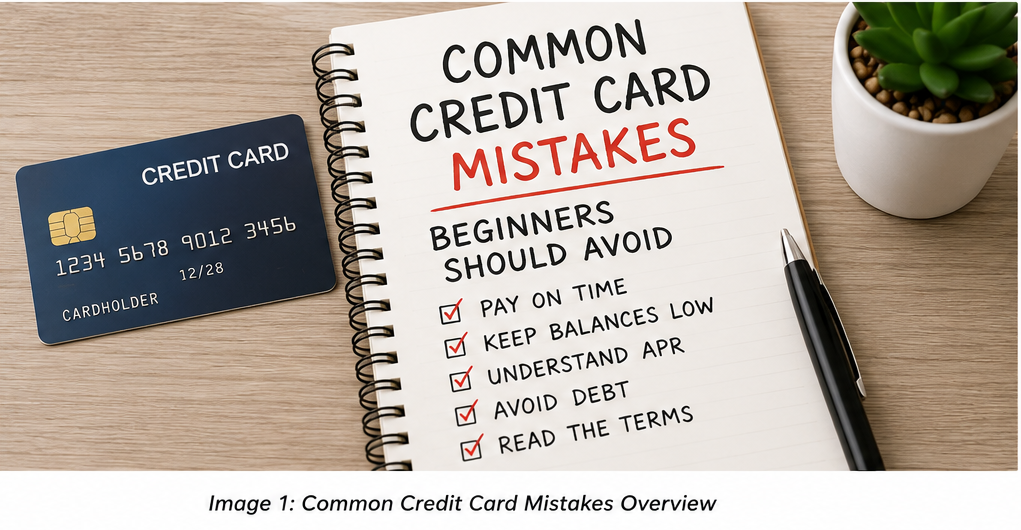
Credit cards can be useful financial tools when they are used responsibly. They can help you build credit, manage everyday purchases, earn rewards, and create a stronger financial profile over time.
But for beginners, credit cards can also become expensive if they are used the wrong way. Simple mistakes can lead to late fees, interest charges, lower credit scores, and unnecessary debt.
The good news is that most credit card mistakes are avoidable. Once you understand what to watch out for, it becomes much easier to use a credit card wisely.
This guide explains common credit card mistakes beginners should avoid and how to build better credit card habits from the start.
Why Credit Card Mistakes Matter
Credit card mistakes can affect more than just your current balance.
They may affect your credit score, your ability to qualify for future loans, your interest rates, and your financial flexibility. A few poor habits can create long-term problems, while good habits can help you build credit over time.
Beginners should remember one simple rule:
A credit card is not extra income. It is borrowed money that must be repaid.
If you use your card carefully, it can help you. If you use it carelessly, it can become expensive.
Mistake 1: Missing Payment Due Dates
One of the biggest credit card mistakes is missing your payment due date.
Payment history is an important part of your credit profile. When you pay late, you may be charged a late fee. If the payment is very late, it may also be reported to the credit bureaus and hurt your credit score.
Even one missed payment can create problems.
A simple way to avoid this mistake is to set payment reminders. You can use your phone calendar, email reminders, or automatic payments through your card issuer.
If you use automatic payments, make sure your bank account has enough money available. Automatic payments can help, but they only work well if you monitor your account.
The safest habit is to check your credit card statement every month and pay before the due date.
Mistake 2: Only Making the Minimum Payment
Many beginners think making the minimum payment is enough.
Technically, paying the minimum keeps your account in good standing. But it can become expensive if you carry a balance month after month.
The minimum payment is usually only a small portion of your total balance. If you pay only the minimum, the remaining balance can continue to collect interest.
This can make your purchases cost much more over time.
For example, a small balance can become expensive if interest keeps adding up every month. The longer you take to pay off the balance, the more interest you may pay.
When possible, pay your full statement balance. If you cannot pay in full, try to pay more than the minimum.
Mistake 3: Carrying a High Balance
Another common mistake is using too much of your available credit.
This is called credit utilization. Credit utilization means how much of your credit limit you are using.
For example, if your credit limit is $1,000 and your balance is $700, your utilization is 70%.
High utilization can hurt your credit score because it may make you look financially stretched. It can also make it harder to manage payments.
Many beginners try to keep utilization below 30%. Lower can be even better.
If you have a $1,000 credit limit, keeping your balance below $300 may be a smart target. If possible, paying the balance in full every month is even better.
Mistake 4: Ignoring APR
APR stands for Annual Percentage Rate. It is the interest rate you may pay if you carry a balance.
Many beginners focus on rewards, cash back, or sign-up offers, but ignore APR. This can be a costly mistake.
Rewards may give you 1% or 2% back on purchases, but credit card interest can cost much more if you do not pay your balance in full.
This is why rewards should never be the main reason to carry debt.
Before applying for a credit card, check the APR. Also understand that your actual APR may depend on your credit profile and the card issuer’s terms.
If you pay your full balance by the due date, you can usually avoid interest on purchases. But if you carry a balance, APR becomes very important.
Mistake 5: Overspending for Rewards
Cash back, points, and miles can be useful. But some beginners spend more money just to earn rewards.
This is a bad habit.
If you buy things you do not need just to earn cash back, you are not saving money. You are spending more money.
For example, earning $2 in rewards does not help if you spent $100 on something unnecessary.
Rewards should be a bonus on purchases you already planned to make. They should not be a reason to increase your spending.
A smart rule is:
Do not spend for rewards. Earn rewards on spending you already needed.
Mistake 6: Applying for Too Many Cards at Once
Some beginners apply for several credit cards in a short period of time.
This can be risky.
Each credit card application may create a hard inquiry on your credit report. Too many hard inquiries in a short time can make you look risky to lenders.
Opening too many cards too quickly can also make it harder to manage payments, due dates, balances, and spending habits.
If you are new to credit, start with one card. Learn how to manage it well. After several months of responsible use, you can decide whether another card makes sense.
Building credit is not a race.
Mistake 7: Using Cash Advances
A cash advance allows you to withdraw cash using your credit card.
Beginners should be very careful with cash advances.
Cash advances often come with high fees and higher APRs. Interest may also start immediately, without the same grace period that may apply to regular purchases.
This makes cash advances one of the most expensive ways to use a credit card.
Unless it is a true emergency, it is usually better to avoid cash advances.
If you need cash, consider other options first and understand all costs before using your credit card this way.
Mistake 8: Not Reading the Card Terms
Credit card marketing often highlights rewards, benefits, or special offers. But the most important details are usually in the card terms.
Beginners should read the terms before applying.
Look for:
- Annual fee
- APR
- Late payment fee
- Foreign transaction fee
- Balance transfer fee
- Cash advance fee
- Penalty APR
- Reward limits
- Introductory offer rules
- Grace period information
Do not rely only on advertisements. A card can look attractive but still have fees or rules that do not fit your needs.
Reading the terms can help you avoid surprises later.
Mistake 9: Closing an Old Card Too Quickly
Some beginners close a credit card as soon as they stop using it.
Sometimes closing a card makes sense, especially if it has a high annual fee or you no longer want the account. But closing an old card too quickly may affect your credit profile.
Older accounts can contribute to your credit history. Also, closing a card can reduce your total available credit, which may increase your credit utilization.
For example, if you have two cards and close one, your total credit limit may drop. If your balance stays the same, your utilization may go up.
Before closing a card, consider whether it has an annual fee, how old the account is, and how it affects your overall credit limit.
If the card has no annual fee and no major problem, keeping it open may sometimes be useful.
Mistake 10: Treating Credit as Extra Income
This is one of the most dangerous beginner mistakes.
A credit limit is not extra income. It is money you are allowed to borrow, and it must be repaid.
If your credit limit is $2,000, that does not mean you have an extra $2,000 to spend. It means the card issuer is allowing you to borrow up to that amount.
Using credit as extra income can quickly lead to debt.
A better approach is to treat your credit card like a payment tool, not a loan for everyday lifestyle spending.
Only charge what you can afford to repay.
How to Build Better Credit Card Habits
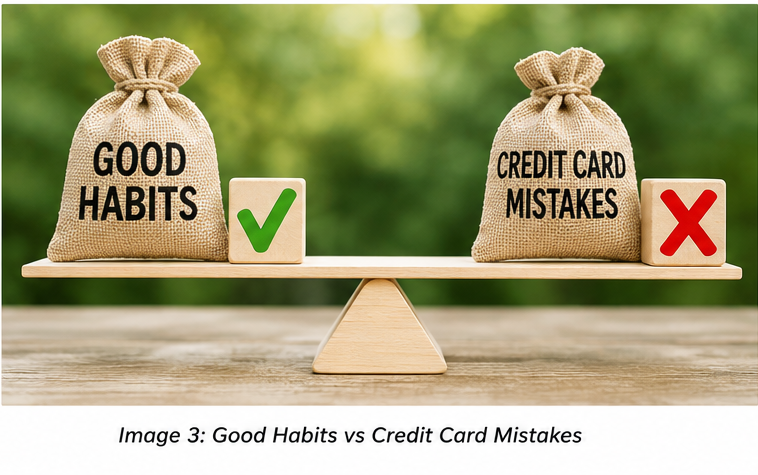
Good credit card habits are simple, but they require consistency.
Start by using your card for small planned purchases. This could be groceries, gas, or a monthly subscription.
Track your spending during the month. Do not wait until the statement arrives to find out how much you spent.
Pay your bill on time every month. If possible, pay the full statement balance.
Keep your balance low compared with your credit limit.
Read your statement and card terms carefully.
Avoid using credit cards for emotional spending, impulse purchases, or things outside your budget.
Over time, these habits can help you build a stronger credit profile.
A Simple Beginner Strategy
If you are new to credit cards, keep your strategy simple.
Start with one card. Use it for small purchases. Pay it off every month. Keep your utilization low. Avoid unnecessary applications. Do not chase rewards too aggressively.
After six months, review your progress.
Ask yourself:
- Did I pay on time every month?
- Did I avoid interest charges?
- Did I keep my balance low?
- Did I stay within my budget?
- Do I understand my card terms?
If the answer is yes, you are building strong habits.
Final Thoughts
Credit cards can help beginners build credit and manage purchases, but only when used responsibly.
The most common mistakes include missing payments, carrying high balances, ignoring APR, overspending for rewards, applying for too many cards, and treating credit as extra income.
The best approach is simple: pay on time, keep balances low, understand your card terms, and never spend more than you can afford to repay.
A credit card is a tool. Used wisely, it can help you build a stronger financial foundation. Used carelessly, it can become expensive very quickly.
Disclaimer
The information in this article is for educational purposes only and should not be considered financial, legal, tax, credit, or investment advice. Credit card terms, fees, APRs, rewards, credit score factors, reporting policies, and approval requirements may change over time. Always review the official terms and disclosures from the credit card issuer before applying or using any credit card. If you have questions about your personal financial situation, consider speaking with a qualified professional.
Leave a Reply