
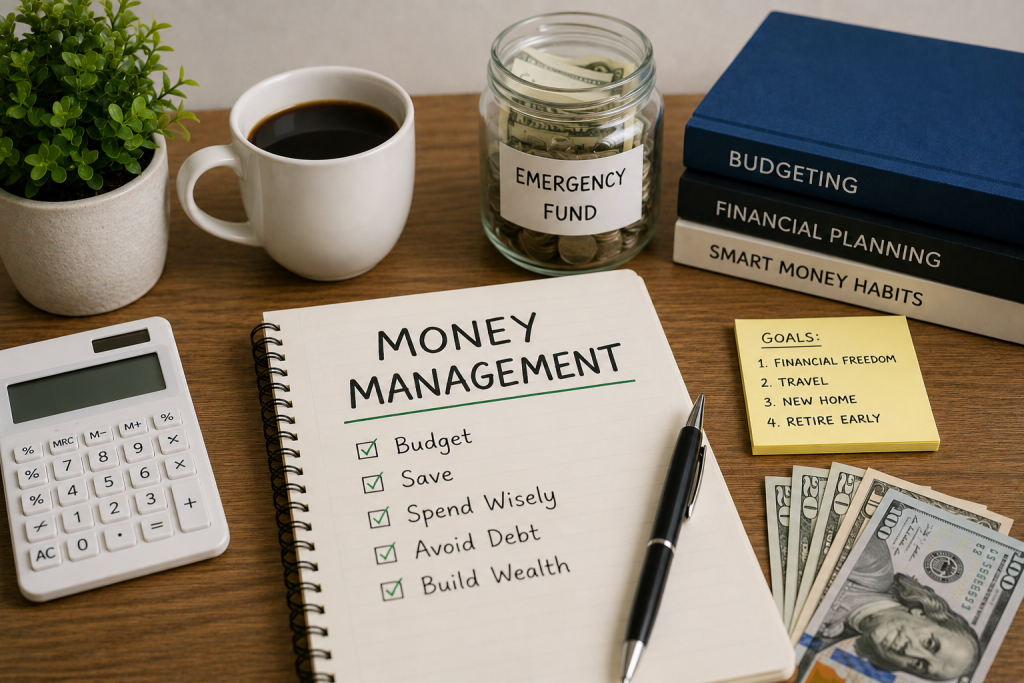
Managing money can feel confusing when you are just getting started. There are many financial topics to understand, including budgeting, saving, bank accounts, credit cards, loans, bills, fees, and financial apps.
The good news is that basic money management does not have to be complicated.
For beginners, the goal is to build simple habits that help you understand where your money goes, pay bills on time, save for emergencies, avoid unnecessary debt, and compare financial products carefully.
This guide explains basic money management in the USA step by step.
Why Money Management Matters
Money management matters because your financial decisions affect your daily life.
The way you spend, save, borrow, and pay bills can affect your budget, credit, stress level, and future options.
Good money management can help you:
- Pay bills on time
- Avoid overdrafts and late fees
- Build emergency savings
- Use credit more responsibly
- Understand financial products
- Avoid unnecessary debt
- Prepare for future goals
- Feel more confident with money
You do not need to be rich to manage money well.
You need a clear plan, simple habits, and the ability to review your financial choices before making decisions.
Start With a Simple Budget
A budget is a plan for your money.
It helps you understand how much money comes in, how much goes out, and how much is left for savings or other goals.
Start by writing down your monthly take-home income. This is the money you actually receive after taxes and deductions.
Then list your essential expenses, such as rent, utilities, groceries, transportation, insurance, phone bill, internet, and minimum debt payments.
Next, list flexible spending, such as restaurants, entertainment, shopping, subscriptions, hobbies, and personal spending.
Finally, choose an amount to save if possible.
A simple budget does not need to be perfect. It only needs to help you see your money clearly.
Open the Right Bank Accounts
Bank accounts are an important part of managing money.
Most beginners need a checking account and a savings account.
A checking account is usually used for everyday money activity. You may use it for direct deposit, debit card purchases, bill payments, transfers, and ATM withdrawals.
A savings account is usually used to store money for future needs. This may include emergency savings, short-term goals, or planned expenses.
When choosing a bank account, compare:
- Monthly fees
- Minimum balance requirements
- ATM access
- Mobile banking tools
- Online bill pay
- Transfer options
- Customer support
- Account alerts
- Overdraft rules
A good bank account should be simple, affordable, and easy to manage.
Build an Emergency Fund
An emergency fund is money saved for unexpected expenses.
This is one of the most important financial tools for beginners.
Unexpected expenses may include car repairs, medical bills, urgent travel, home repairs, temporary job loss, or sudden income changes.
Without emergency savings, you may need to rely on credit cards, loans, or borrowed money.
Start with a small goal, such as $500 to $1,000.
After that, you can work toward saving three to six months of essential expenses over time.
Keep emergency savings separate from daily spending money. A separate savings account can help protect the money from being spent by accident.
Understand Credit Cards
Credit cards can be useful, but they should be used carefully.
A credit card gives you access to a credit limit. You can use the card for purchases and repay the balance later.
If you pay the full statement balance by the due date, you may avoid interest on purchases, depending on the card terms.
If you carry a balance, interest can become expensive.
Beginners should understand:
- APR
- Minimum payment
- Due date
- Credit limit
- Statement balance
- Available credit
- Late payment fees
- Annual fees
- Rewards
- Credit utilization
A credit card is not extra income. It is borrowed money.
A simple rule is to use a credit card only for purchases you can afford to pay off.
Learn How Loans Work
Loans can help pay for larger expenses, but they also create repayment responsibility.
A loan usually gives you money upfront, and you repay it over time with interest.
Common loans may include personal loans, auto loans, student loans, mortgages, or other installment loans.
Before accepting any loan, compare:
- Loan amount
- APR
- Interest rate
- Monthly payment
- Loan term
- Total repayment cost
- Origination fees
- Late fees
- Prepayment penalties
- Lender reputation
- Repayment rules
Do not choose a loan only because the monthly payment looks low.
A lower monthly payment may come from a longer repayment term, which can increase the total cost.
Borrow only what you need and make sure the payment fits your budget.
Track Your Spending
Tracking your spending helps you understand where your money goes.
Many people underestimate small purchases. Coffee, takeout, subscriptions, shopping apps, and convenience purchases can add up quickly.
Start by reviewing your bank and card transactions from the last 30 days.
Group your spending into categories such as housing, groceries, transportation, restaurants, subscriptions, entertainment, shopping, savings, and debt payments.
Tracking spending can help you:
- Find unnecessary expenses
- Cancel unused subscriptions
- Improve your budget
- Avoid overspending
- Build savings
- Understand your habits
You can track spending with a notebook, spreadsheet, budgeting app, bank app, or simple notes on your phone.
The best system is the one you will actually use.
Pay Bills on Time
Paying bills on time is one of the most important money habits.
Late bills can lead to fees, stress, service interruptions, and possible credit problems.
To stay organized, create a bill system.
You can write down due dates, set phone reminders, use calendar alerts, review bills weekly, or set up automatic payments carefully.
Important bills may include:
- Rent or mortgage
- Utilities
- Phone bill
- Internet
- Insurance
- Credit card payments
- Loan payments
- Subscriptions
- Medical bills
If you use automatic payments, make sure enough money is available in your account before the due date.
Avoid Unnecessary Debt
Debt can become stressful if it is not managed carefully.
Credit cards, personal loans, buy-now-pay-later plans, and other borrowing options should be used with a clear plan.
Before borrowing money, ask:
- Do I really need this?
- Can I wait and save for it?
- Can I afford the payment?
- What is the APR?
- What fees apply?
- How long will repayment take?
- Will this create financial pressure later?
Avoid borrowing for impulse purchases, unnecessary upgrades, or spending that does not fit your budget.
If you already have debt, focus on making payments on time and avoid adding new debt without a reason.
Review Financial Products Carefully
Financial products can include bank accounts, credit cards, personal loans, budgeting apps, savings accounts, and other financial tools.
Before signing up for any financial product, read the details carefully.
Check:
- Fees
- APR
- Interest rate
- Rewards
- Account requirements
- Minimum balance rules
- Payment terms
- Withdrawal rules
- Customer support
- Security features
- Cancellation rules
- Fine print
Advertising may highlight benefits, but the full terms matter.
A product that looks attractive may have fees, requirements, or limitations that do not fit your needs.
Always compare options before applying.
Build Better Financial Habits
Better money management comes from habits.
You do not need to change everything at once.
Start with simple habits, such as:
- Check your accounts weekly
- Track spending
- Use a monthly budget
- Save a small amount regularly
- Pay bills before the due date
- Avoid impulse purchases
- Review subscriptions
- Compare fees before signing up
- Keep emergency savings separate
- Read financial terms carefully
Small habits can create big changes over time.
The key is consistency.
Even if you make mistakes, return to the habit and keep improving.
Understand Needs vs Wants
A need is something important for basic living, safety, health, income, or financial stability.
Examples include housing, groceries, utilities, transportation, insurance, medical care, and minimum debt payments.
A want is something optional or flexible.
Examples include restaurants, entertainment, travel, shopping, upgraded electronics, and extra subscriptions.
Wants are not bad, but they should fit your budget.
A healthy money plan usually covers needs first, then savings and debt payments, then wants.
Understanding this difference can help you make better spending decisions.
Use Financial Apps Carefully
Financial apps can be useful for budgeting, banking, saving, investing, or tracking expenses.
However, beginners should choose apps carefully.
Before signing up, check:
- Fees
- Subscription costs
- Security features
- Account connection requirements
- Privacy policy
- Customer reviews
- Cancellation process
- What the app actually does
Do not download financial apps from unknown websites.
Use official app stores and review the company behind the app.
A good financial app should make money management easier, not more confusing.
Common Beginner Money Mistakes
One common mistake is not having a budget.
Without a budget, it is easy to lose track of spending.
Another mistake is using credit cards without a repayment plan.
Some beginners only make minimum payments and do not realize how much interest can build over time.
Another mistake is ignoring fees.
Bank fees, loan fees, credit card fees, and app subscription fees can add up.
Some people also forget to build emergency savings.
Another common mistake is accepting financial products without reading the terms.
Taking time to review details can help avoid expensive surprises.
Final Thoughts
Managing money in the USA can feel complicated at first, but beginners can start with simple steps.
Create a monthly budget. Open the right bank accounts. Build an emergency fund. Understand credit cards. Learn how loans work. Track your spending. Pay bills on time. Avoid unnecessary debt. Review financial products carefully. Build better habits over time.
You do not need to master everything immediately.
Start with one habit, then add another.
Small consistent actions can help you feel more confident and make better financial decisions.
Disclaimer
The information in this article is for educational purposes only and should not be considered financial, legal, tax, credit, loan, or investment advice. Financial products, account terms, fees, APRs, interest rates, approval requirements, and policies may change over time. Always review the official terms and disclosures from the financial institution, lender, card issuer, or service provider before applying for or using any financial product. If you have questions about your personal financial situation, consider speaking with a qualified professional.
Leave a Reply