
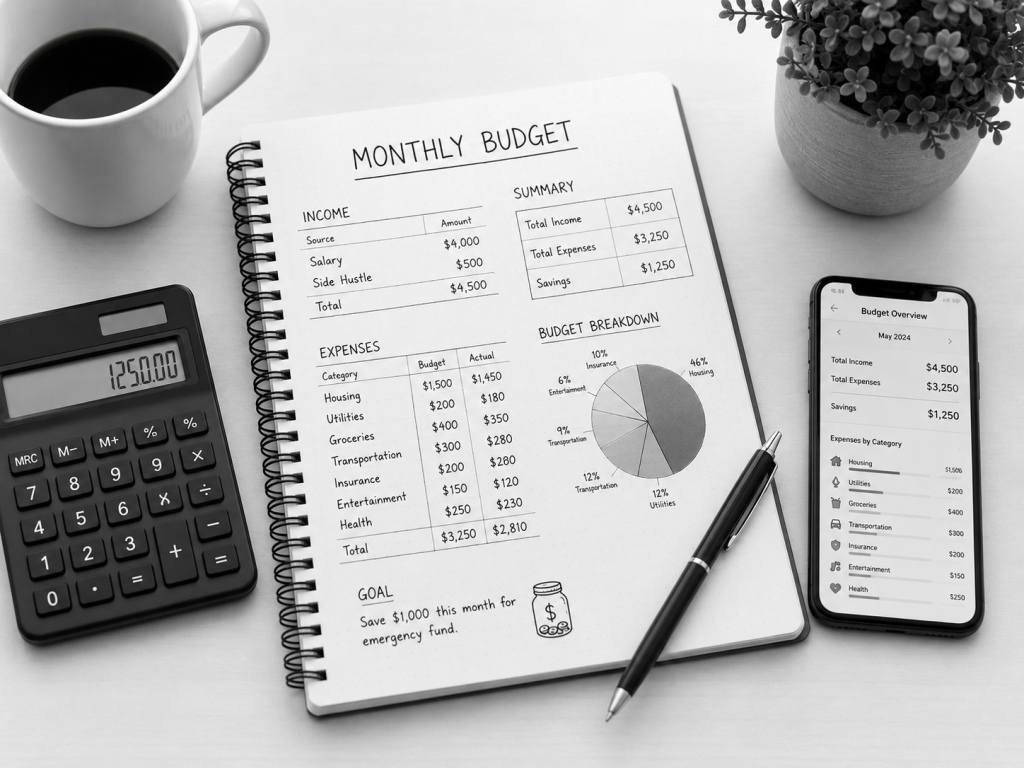
Creating a monthly budget is one of the simplest ways to understand where your money goes and make better financial decisions.
A budget does not have to be complicated. For beginners, a simple monthly budget can help you track income, list expenses, plan spending, save money, and avoid unnecessary financial stress.
Many people think budgeting means restricting everything. But a good budget is not only about saying no. It is about giving your money a clear plan before the month begins.
This guide explains how to create a simple monthly budget step by step.
Why Budgeting Matters
Budgeting matters because it helps you stay in control of your money.
Without a budget, it is easy to spend without noticing. Small purchases, subscriptions, takeout meals, online shopping, and unexpected bills can add up quickly.
A monthly budget helps you understand your income, expenses, savings, and debt payments.
A budget can help you:
- Avoid overspending
- Prepare for bills
- Build savings
- Pay down debt
- Reduce money stress
- Understand spending habits
- Plan for future goals
A budget does not need to be perfect. It only needs to be useful and realistic.
Step 1: Know Your Monthly Income
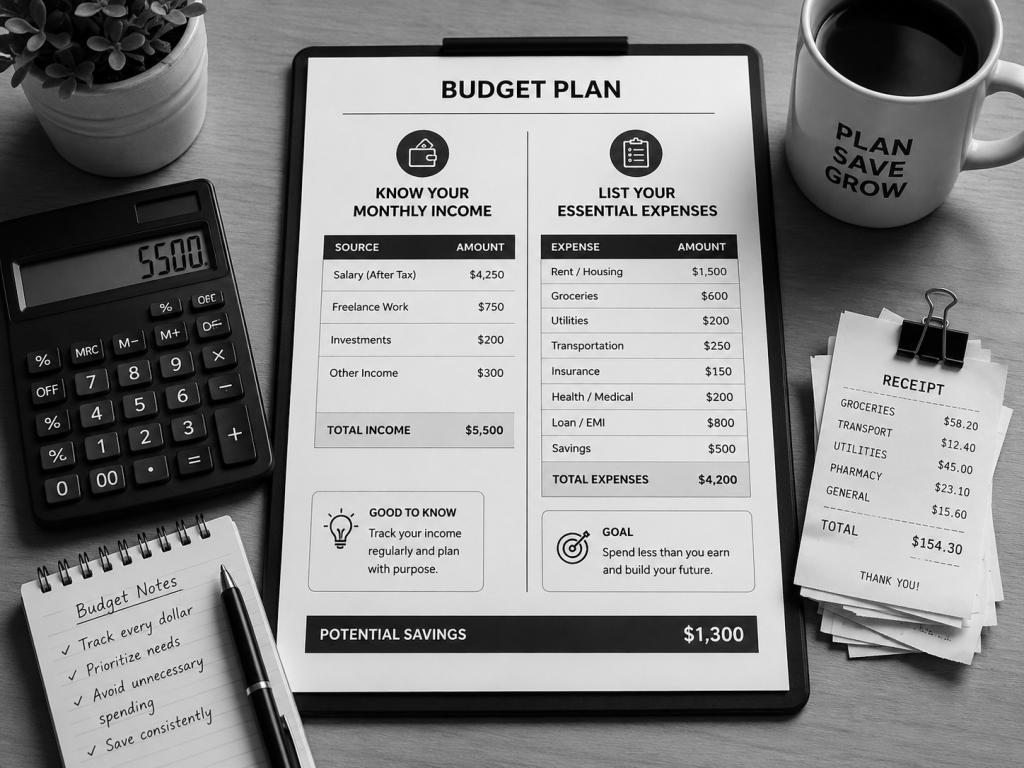
The first step is to know how much money comes in each month.
Monthly income may include your paycheck, freelance income, business income, side job income, government benefits, or other regular money you receive.
If your income is the same every month, this step is simple.
If your income changes, use a conservative estimate. For example, you may use your average income from the last few months or use the lowest amount you usually earn.
It is usually safer to budget based on money you are confident you will receive.
Do not build your budget around income that is uncertain.
When writing your income, focus on take-home pay. Take-home pay is the money you actually receive after taxes and deductions.
Step 2: List Your Essential Expenses
Essential expenses are the costs you usually must pay every month.
These may include:
- Rent or mortgage
- Utilities
- Groceries
- Transportation
- Insurance
- Phone bill
- Internet bill
- Minimum debt payments
- Childcare
- Medical costs
- Basic household needs
Essential expenses are the foundation of your budget because they usually come before optional spending.
When listing essential expenses, use real numbers if possible.
Look at bank statements, bills, receipts, or payment history to estimate your monthly costs.
Some expenses are fixed, meaning they stay the same each month. Rent is a common example.
Other expenses may change. Groceries, utilities, gas, and medical costs may vary.
For variable expenses, use a realistic estimate.
Step 3: Track Flexible Spending
Flexible spending includes the money you spend on things that are useful or enjoyable but not always required.
Examples may include:
- Restaurants
- Coffee
- Entertainment
- Streaming services
- Clothing
- Online shopping
- Hobbies
- Travel
- Gifts
- Personal care
- Subscriptions
Flexible spending is where many beginners lose track of money.
One small purchase may not seem important, but many small purchases can create a big difference by the end of the month.
Tracking flexible spending helps you see patterns.
You may notice that you spend more than expected on food delivery, shopping apps, subscriptions, or weekend activities.
The goal is not to remove all fun from your life. The goal is to know where your money is going and choose spending that fits your priorities.
Step 4: Set Savings Goals
Savings should be part of your monthly budget, even if the amount is small.
A savings goal gives your money a purpose.
Common savings goals include:
- Emergency fund
- Car repairs
- Medical expenses
- Travel
- Holiday spending
- Home expenses
- School costs
- Moving costs
- Future purchases
For beginners, a small emergency fund is often a good first goal.
Even saving $20, $50, or $100 per month can help build the habit.
If saving feels difficult, start with a small amount that you can repeat consistently.
Consistency matters more than starting with a large number.
You can also set up automatic transfers from checking to savings after each paycheck. This can make saving easier because you do not have to remember every time.
Step 5: Plan for Debt Payments
If you have debt, include it in your monthly budget.
Debt payments may include credit cards, personal loans, auto loans, student loans, medical debt, or other repayment obligations.
At minimum, you should plan for required monthly payments.
If possible, you may also plan extra payments toward high-interest debt.
High-interest debt can become expensive over time, so paying more than the minimum may help reduce the total cost.
However, your budget should still be realistic.
Do not plan a debt payment so large that you cannot afford rent, food, transportation, or basic needs.
A balanced budget should help you make progress without creating new financial stress.
Step 6: Review Your Budget Every Month
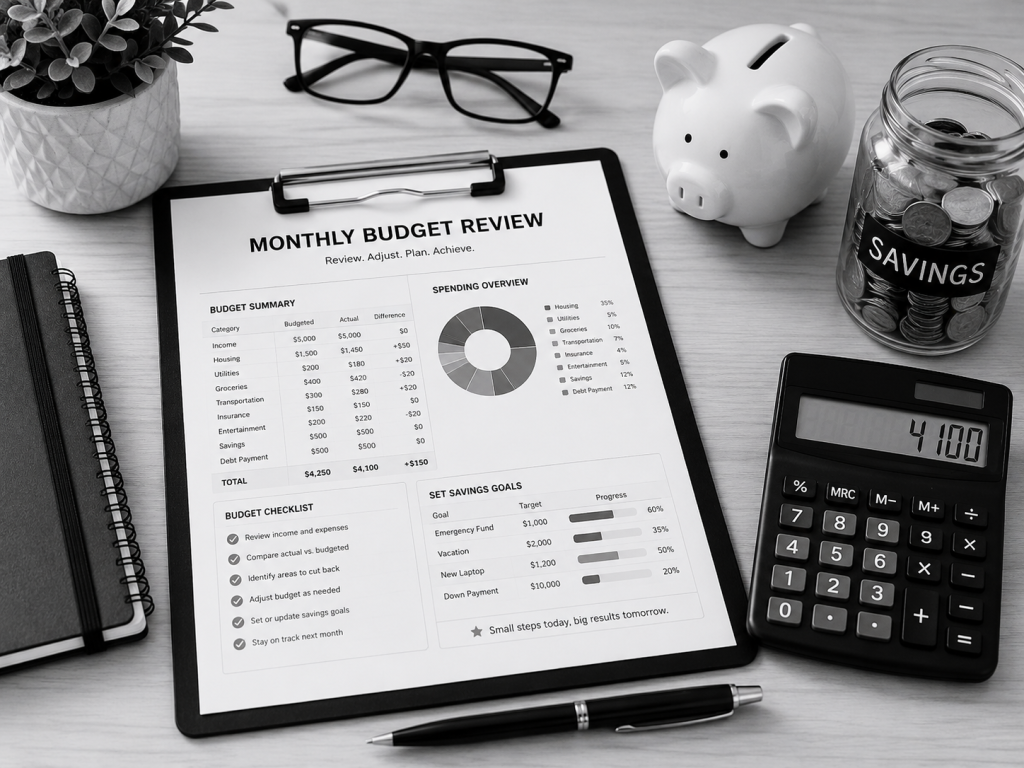
A budget is not something you create once and forget.
Your income, expenses, goals, and needs may change over time.
Review your budget at least once a month.
During your review, ask:
- Did I spend more than expected?
- Which categories were too high?
- Did I save money?
- Did I miss any bills?
- Do I need to adjust next month?
- Are there subscriptions I no longer use?
- Can I reduce any unnecessary spending?
Your first budget may not be perfect. That is normal.
Budgeting improves as you learn your real spending habits.
The goal is progress, not perfection.
A simple monthly review can help you adjust before small problems become bigger ones.
Simple Budget Formula for Beginners
A simple budget can be divided into three main groups:
- Needs
- Wants
- Savings and debt payments
Needs are essential expenses such as housing, utilities, groceries, transportation, and insurance.
Wants are optional expenses such as restaurants, entertainment, shopping, and hobbies.
Savings and debt payments include emergency savings, future goals, and extra debt repayment.
You do not need to follow one exact percentage rule.
Some people use a 50/30/20 style budget, where 50 percent goes to needs, 30 percent to wants, and 20 percent to savings and debt repayment.
However, this may not fit everyone.
If your housing, income, family size, or debt situation is different, your budget may need different numbers.
Use any formula as a guide, not a strict rule.
How to Build a Simple Budget
Here is a simple way to build your monthly budget.
First, write down your monthly take-home income.
Second, list your essential expenses.
Third, estimate your flexible spending.
Fourth, choose a savings amount.
Fifth, include debt payments.
Sixth, subtract all expenses from your income.
If money is left over, you can add more to savings, debt repayment, or future goals.
If your expenses are higher than your income, you need to adjust.
You may need to reduce flexible spending, lower optional costs, review subscriptions, or look for ways to increase income.
A budget should show the truth clearly. Once you see the numbers, it becomes easier to make decisions.
Common Budgeting Mistakes Beginners Make
One common mistake is guessing instead of using real numbers.
If you guess too low, your budget may look good on paper but fail in real life.
Another mistake is forgetting irregular expenses.
Some bills do not happen every month, such as car registration, annual insurance, holiday gifts, repairs, or medical costs.
It can help to divide yearly expenses by 12 and save a little each month.
Another mistake is making the budget too strict.
If your budget allows no room for small enjoyment, it may be hard to follow.
Some beginners also forget to review their budget regularly.
A budget needs updates as life changes.
Another common mistake is ignoring small purchases.
Small expenses can add up and affect your monthly plan.
Simple Budgeting Tips
Keep your budget simple.
Use a notebook, spreadsheet, budgeting app, or bank app. The best tool is the one you will actually use.
Check your spending weekly instead of waiting until the end of the month.
Set alerts for low balances or large transactions.
Review subscriptions and cancel ones you no longer use.
Plan for irregular expenses before they happen.
Separate savings from spending money.
Avoid comparing your budget to someone else’s budget.
Your budget should match your income, expenses, goals, and lifestyle.
A simple budget that you follow is better than a perfect budget you never use.
How a Budget Helps Build Better Habits
A monthly budget helps you become more aware of your money.
When you see your income and expenses clearly, you can make better decisions.
You may notice where money is being wasted.
You may find areas where you can save more.
You may also feel more confident because you know what bills are coming and how much money is available.
Budgeting is not only about math. It is also about habits.
Good money habits are built through small repeated actions.
Checking your budget, saving regularly, avoiding unnecessary debt, and planning ahead can make a big difference over time.
Final Thoughts
Creating a simple monthly budget is one of the best first steps for better money management.
A budget helps you understand your income, plan expenses, track spending, build savings, and manage debt more clearly.
For beginners, the best budget is simple, realistic, and easy to review.
Start with your take-home income. List your essential expenses. Track flexible spending. Set savings goals. Plan for debt payments. Review your budget every month.
Your first budget does not need to be perfect.
It only needs to help you see your money clearly and make better financial decisions.
Disclaimer
The information in this article is for educational purposes only and should not be considered financial, legal, tax, credit, loan, or investment advice. Budgeting methods, financial strategies, savings goals, and debt repayment approaches may not fit every personal situation. Always review your own income, expenses, obligations, and financial needs before making financial decisions. If you have questions about your personal financial situation, consider speaking with a qualified professional.
Leave a Reply