
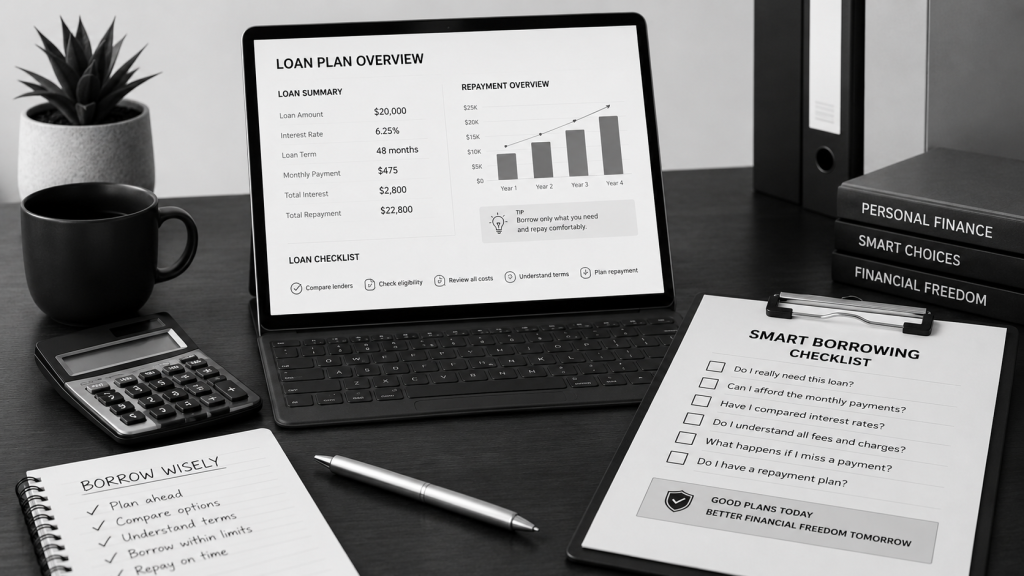
Borrowing money can sometimes be useful, but it can also create financial stress if the loan is not managed carefully.
For beginners, a bad loan decision can lead to high monthly payments, expensive fees, damaged credit, or long-term debt that becomes difficult to repay.
A loan should not be accepted only because the approval process is fast or the monthly payment looks small. Before borrowing, it is important to understand the full cost, the repayment terms, and whether the loan fits your budget.
This guide explains how beginners can avoid bad loan decisions and borrow more carefully.
Why Loan Decisions Matter
Loan decisions matter because borrowing money affects your future income and financial flexibility.
When you accept a loan, you agree to make payments over time. Those payments may continue for months or years.
If the loan payment is too high, it can make it harder to pay rent, utilities, food, insurance, transportation, credit cards, or other important expenses.
A loan can also affect your credit. On-time payments may help build a positive payment history, while late or missed payments can damage your credit.
This is why beginners should slow down and review the loan carefully before accepting.
Borrow Only What You Really Need
One common mistake is borrowing more money than needed.
A lender may approve you for a larger amount than you originally planned to borrow. This can feel tempting, but a larger loan usually means more debt, more interest, and higher repayment responsibility.
Before applying, ask yourself how much money you actually need, what the loan is for, and whether you can solve the problem with a smaller amount.
Borrowing less can reduce the total cost and make repayment easier.
A loan should match a real financial need, not extra spending.
Understand APR Before Applying
APR stands for Annual Percentage Rate.
APR helps show the yearly cost of borrowing money. It may include the interest rate and certain fees.
For beginners, APR is one of the most important numbers to compare.
A low monthly payment may look attractive, but if the APR is high, the loan may still be expensive.
For example, a loan with a longer term may reduce the monthly payment, but you may pay more interest over time.
Before applying, compare APRs from different lenders if possible.
Do not choose a loan only because the advertisement says the payment is affordable.
Check All Fees Carefully
Loan fees can increase the cost of borrowing.
Common loan fees may include origination fees, late payment fees, returned payment fees, prepayment penalties, application fees, processing fees, and administrative fees.
An origination fee is a fee some lenders charge for processing the loan. It may be deducted from the loan amount or added to the loan cost.
A late payment fee may apply if you miss a due date.
A prepayment penalty may apply if you pay off the loan early.
Before accepting any loan, check the full fee schedule.
A loan with a lower interest rate may still be expensive if the fees are high.
Make Sure the Monthly Payment Fits Your Budget
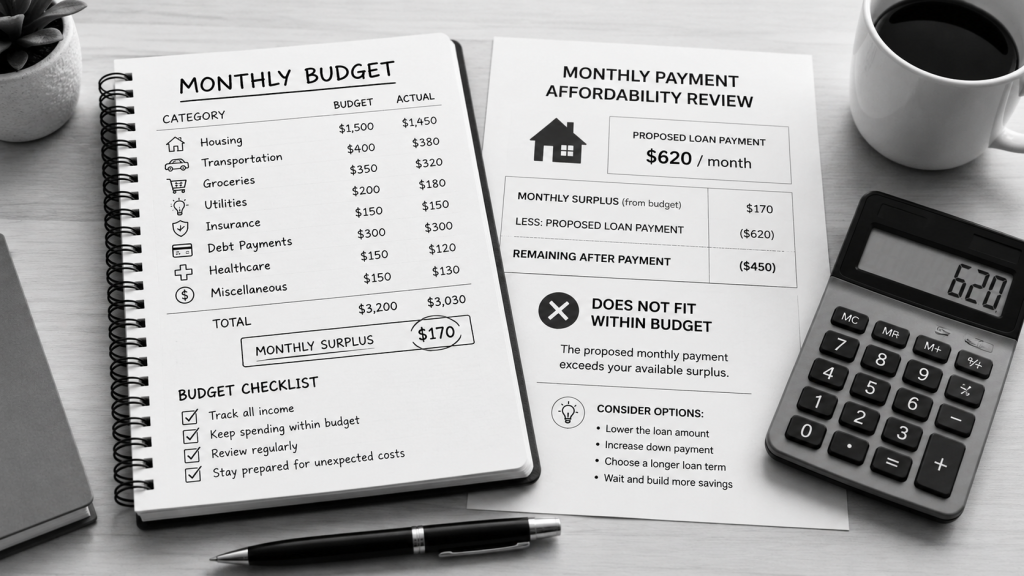
The monthly payment is one of the most important parts of a loan.
Before accepting a loan, make sure the payment fits your real budget.
Do not only ask whether you can make the first payment. Ask whether you can make every payment until the loan is fully repaid.
Look at your income and regular expenses, including rent or mortgage, utilities, food, transportation, insurance, phone bills, credit card payments, other loan payments, emergency savings, and unexpected expenses.
If the loan payment leaves your budget too tight, it may not be a good decision.
A loan should not make your financial life unstable.
Avoid Loans You Do Not Understand
Never accept a loan you do not understand.
If the terms are confusing, take time to ask questions.
You should understand the loan amount, APR, interest rate, monthly payment, loan term, total repayment cost, fees, due date, late payment rules, prepayment rules, collateral requirements, and default terms.
If a lender does not clearly explain the loan, be careful.
A trustworthy loan should have clear terms and written disclosures.
Do not rely only on verbal promises or advertisements.
Be Careful With Fast Approval Offers
Fast approval can be convenient, but it should not be the only reason you choose a loan.
Some lenders advertise quick cash, instant approval, or easy borrowing. These offers may be useful in some cases, but beginners should still review the terms carefully.
A fast loan can still have high APR, expensive fees, short repayment periods, or strict penalties.
Before accepting a fast approval offer, ask what the APR is, what fees apply, when the first payment is due, how long the repayment term is, what happens if you miss a payment, and whether the lender is reputable.
Speed should not replace careful review.
Check the Lender’s Reputation
Before borrowing, check the lender’s reputation.
A lender should be clear, professional, and easy to contact.
Look for basic signs of trust, such as a clear website, transparent terms, customer support options, and official disclosures.
Be careful with lenders that pressure you to act immediately, avoid explaining fees, ask for unusual upfront payments, or make guarantees that sound unrealistic.
You can also review customer feedback, complaint history, and general reputation before applying.
A loan agreement may last for years, so the lender matters.
Read the Loan Agreement Before Accepting
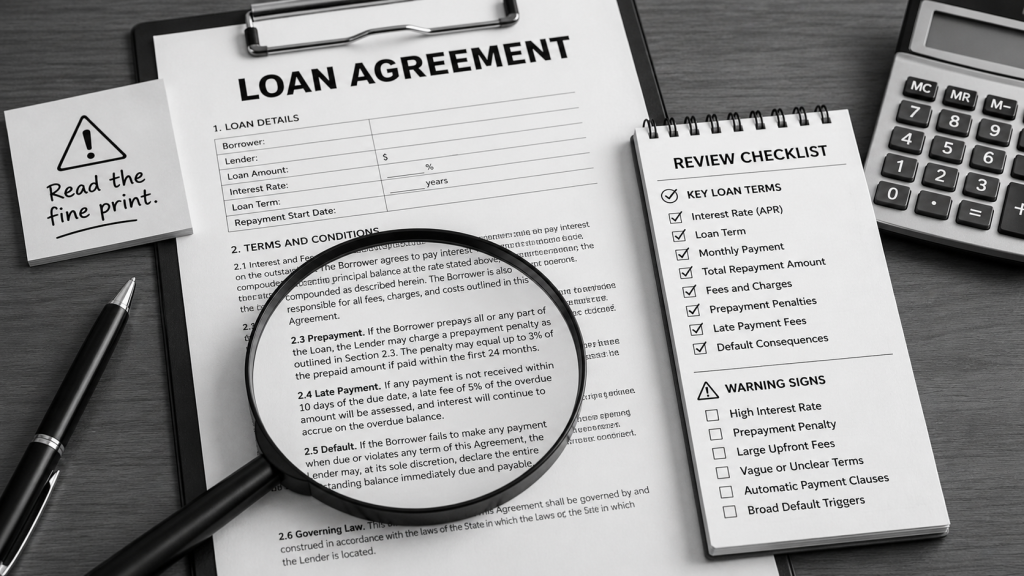
The loan agreement is the official document that explains the loan terms.
Beginners should always read it before accepting.
Important parts to check include loan amount, APR, interest rate, monthly payment, payment due date, loan term, origination fee, late payment fee, returned payment fee, prepayment penalty, collateral requirements, automatic payment rules, default rules, and total repayment amount.
Do not skip the fine print.
The loan agreement may include details that are not obvious in the advertisement.
If something does not make sense, ask the lender before signing or accepting the loan.
Avoid Using Loans for Unnecessary Spending
A loan should be used carefully.
Using loans for unnecessary spending can create debt without improving your financial situation.
Be careful about borrowing for impulse purchases, luxury items, vacations, entertainment, or things you cannot afford without debt.
This does not mean every personal expense is wrong. It means the loan should have a clear purpose and repayment plan.
Before borrowing, ask yourself whether the expense is necessary, whether you can wait and save for it, whether the loan will improve your situation, whether you may regret the payment later, and whether you can repay it comfortably.
A loan should support your financial plan, not create more pressure.
Compare Multiple Loan Options
Comparing loan options can help you avoid bad decisions.
If you only look at one offer, you may not know whether it is expensive or reasonable.
Compare APR, monthly payment, loan term, fees, total repayment cost, lender reputation, funding speed, customer support, prepayment rules, and late payment rules.
Try to compare similar loan amounts and similar repayment terms.
For example, comparing a $10,000 loan for three years from several lenders can make the differences easier to see.
A little comparison before borrowing can save money later.
Watch Out for High-Pressure Sales Tactics
Be careful if a lender pressures you to decide immediately.
High-pressure tactics may include phrases such as “this offer expires right now,” “you must pay a fee before approval,” “everyone is approved,” or “sign now and read later.”
A legitimate loan should give you time to review the terms.
Do not rush into a loan because someone makes it feel urgent.
Borrowing money is serious. You should feel informed before accepting.
Understand the Total Repayment Cost
The total repayment cost is the full amount you will pay over the life of the loan.
This includes the amount borrowed, interest, and certain fees.
For example, if you borrow $8,000 and repay $10,200 over time, the cost of borrowing is $2,200.
Beginners sometimes focus only on the monthly payment.
But the total cost is just as important.
A lower monthly payment may come from a longer repayment term, which can increase total interest.
Before accepting a loan, ask how much you will repay in total, how much the loan will cost beyond the amount borrowed, whether the total cost is worth it, and whether you can afford the payment while still managing other expenses.
Common Beginner Loan Mistakes
Beginners often make avoidable loan mistakes.
One mistake is borrowing more than needed.
Another mistake is accepting the first loan offer without comparing other options.
Some borrowers focus only on the monthly payment and ignore APR, fees, or total cost.
Another common mistake is not reading the loan agreement.
Some people also use loans to cover spending habits instead of solving the real financial issue.
Another mistake is using a loan to pay off credit cards and then building new credit card balances again.
A loan should be part of a realistic plan, not a temporary solution that creates more debt.
How to Make a Better Loan Decision
A better loan decision starts with clear thinking.
Before borrowing, write down why you need the loan and how you plan to repay it.
Then compare the loan details.
A careful borrower should know the exact loan purpose, exact loan amount needed, APR, monthly payment, repayment term, total repayment cost, fees, due date, lender reputation, and consequences of missing payments.
If you cannot explain the loan clearly, you may not be ready to accept it.
Final Thoughts
Bad loan decisions can create financial stress, but many mistakes can be avoided with careful review.
Before borrowing, understand APR, fees, monthly payments, loan terms, total repayment cost, lender reputation, and repayment responsibility.
Do not borrow more than you need.
Do not accept a loan you do not understand.
Do not rush because of fast approval or pressure.
For beginners, the safest approach is simple: compare options, read the agreement, borrow only what is necessary, and choose a payment that fits your budget.
A loan should help solve a problem, not create a bigger one.
Disclaimer
The information in this article is for educational purposes only and should not be considered financial, legal, tax, credit, loan, or investment advice. Loan rates, APRs, fees, approval requirements, repayment terms, lender policies, and consumer protections may change over time. Always review the official loan agreement and disclosures from the lender before applying for or accepting any loan. If you have questions about your personal financial situation, consider speaking with a qualified professional.
Leave a Reply