
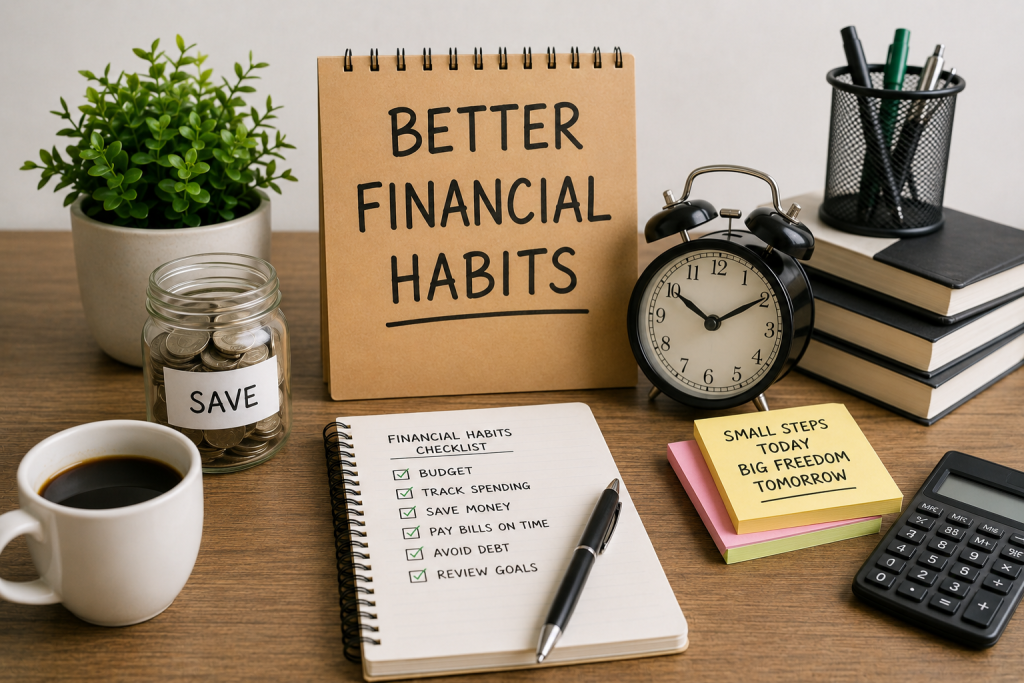
Building better financial habits does not happen overnight. For most people, financial progress comes from small actions repeated consistently over time.
You do not need to be perfect with money to improve your financial life. You only need to start with simple habits that help you understand your spending, manage bills, save regularly, avoid unnecessary debt, and make better decisions.
For beginners, the best financial habits are usually simple, realistic, and easy to repeat.
This guide explains how to build better financial habits step by step.
Why Financial Habits Matter
Financial habits matter because money decisions happen every day.
You decide what to buy, what to skip, when to pay bills, how much to save, whether to use credit, and how often to review your finances.
Small decisions may not seem important at first, but they can create big results over time.
Good financial habits can help you:
- Track your spending
- Avoid late fees
- Build savings
- Reduce debt
- Prepare for emergencies
- Make better spending decisions
- Feel more in control of money
- Plan for future goals
Bad habits can also build over time.
Ignoring bills, overspending, using credit without a plan, and avoiding your budget can create stress later.
Start With Small Money Habits
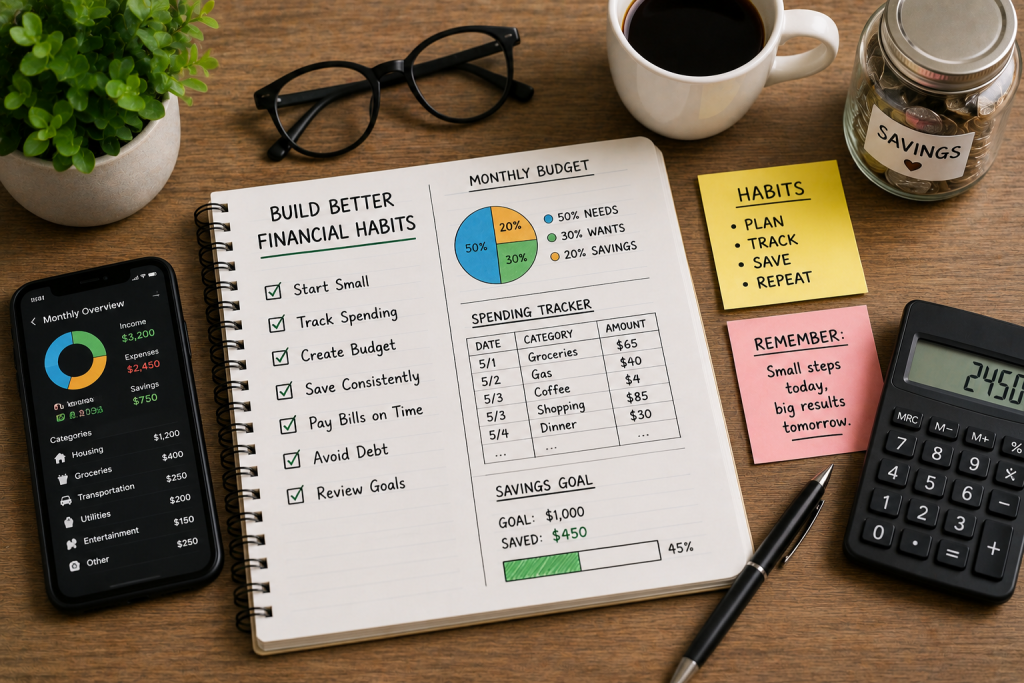
The best way to build better financial habits is to start small.
Many beginners try to change everything at once. They create a strict budget, cut all spending, plan large savings goals, and try to fix every problem immediately.
This can feel overwhelming.
Instead, choose one or two simple habits to start.
Examples include:
- Check your bank account twice a week
- Save $10 every payday
- Review subscriptions once a month
- Track spending for 7 days
- Pay bills before the due date
- Use a shopping list
- Wait 24 hours before buying non-essential items
Small habits are easier to repeat.
When a habit becomes normal, you can add another one.
Track Your Spending Regularly
Tracking spending is one of the most useful financial habits.
Many people know how much they earn, but they do not always know where their money goes.
Tracking helps you see the truth clearly.
You can review your bank transactions, debit card purchases, credit card statements, payment apps, and cash spending.
Group your spending into categories such as housing, groceries, transportation, restaurants, subscriptions, shopping, entertainment, savings, and debt payments.
You do not need to track every dollar forever, but tracking regularly can help you understand your patterns.
Once you know where money is going, it becomes easier to make better decisions.
Create a Simple Monthly Budget
A budget gives your money a plan.
A simple monthly budget can help you organize income, expenses, savings, and debt payments.
Start with your monthly take-home income.
Then list your essential expenses, such as rent, utilities, groceries, transportation, insurance, phone bill, and minimum debt payments.
Next, estimate flexible spending, such as restaurants, shopping, subscriptions, entertainment, and hobbies.
Then choose an amount for savings.
A beginner budget does not need to be complicated.
The goal is to know what money is coming in, what money is going out, and what money is left.
Review your budget every month and adjust when needed.
Save a Small Amount Consistently
Saving money is easier when it becomes a habit.
You do not need to start with a large amount.
Even saving $10, $25, or $50 per paycheck can help build momentum.
The most important part is consistency.
Small savings can help you build an emergency fund, prepare for future expenses, avoid unnecessary debt, and feel more secure.
If possible, keep savings separate from daily spending money.
A separate savings account can make it harder to spend the money by accident.
You can also set up automatic transfers from checking to savings after each payday.
Pay Bills on Time
Paying bills on time is a basic but powerful financial habit.
Late payments can lead to fees, stress, service interruptions, and possible credit problems.
To avoid missed payments, create a simple bill system.
You can:
- Write down due dates
- Set phone reminders
- Use calendar alerts
- Set up automatic payments carefully
- Review bills weekly
- Keep a small buffer in your checking account
Automatic payments can be useful, but you still need to make sure enough money is available before the payment date.
A bill calendar can help you stay organized and avoid surprises.
Avoid Unnecessary Debt
Debt can be useful in some situations, but unnecessary debt can create long-term stress.
Credit cards, personal loans, buy-now-pay-later plans, and other borrowing tools should be used carefully.
Before borrowing, ask:
- Do I really need this?
- Can I wait and save for it?
- Can I afford the payment?
- What is the APR?
- What fees apply?
- How long will repayment take?
- Will this create pressure later?
Avoid using debt for impulse purchases or lifestyle spending you cannot afford.
If you already have debt, focus on making payments on time and avoid adding new debt without a clear plan.
Review Your Financial Goals
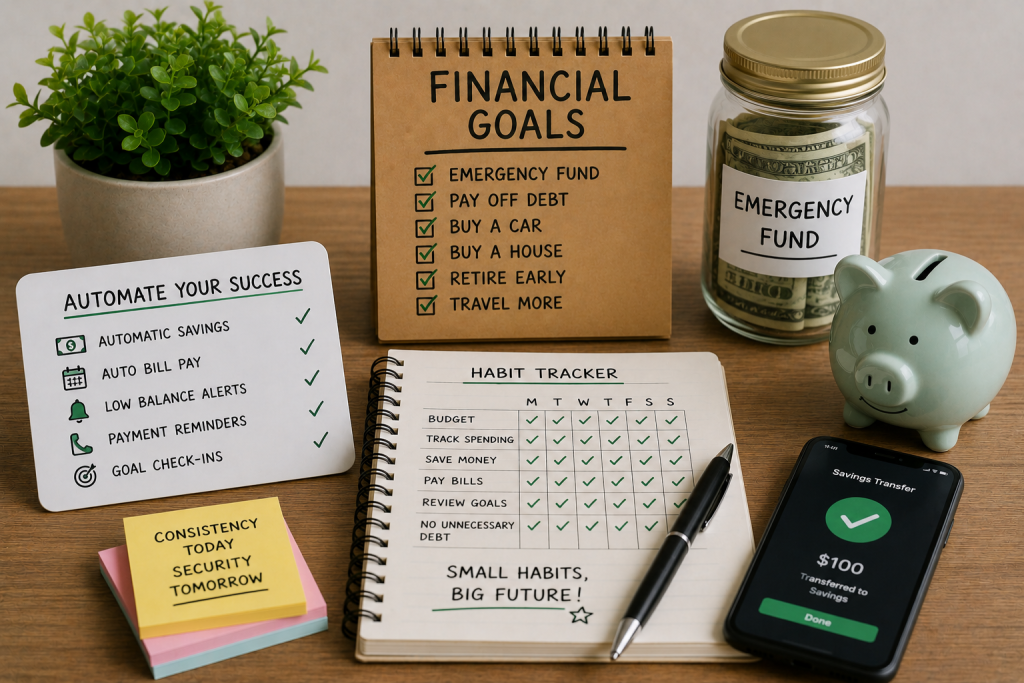
Financial goals give your habits a purpose.
Without goals, saving and budgeting may feel boring or unclear.
Your goals do not need to be large.
Beginner financial goals may include:
- Save $500 for emergencies
- Pay off a small credit card balance
- Cancel unused subscriptions
- Build one month of basic expenses
- Save for car repairs
- Pay bills on time for six months
- Track spending for 30 days
- Reduce food delivery spending
- Start automatic savings
Write down your goals and review them regularly.
A clear goal can make everyday money choices easier.
Build an Emergency Fund
An emergency fund is money saved for unexpected expenses.
This is one of the most important financial habits for beginners.
Unexpected expenses may include car repairs, medical bills, job loss, home repairs, urgent travel, or other surprise costs.
Without emergency savings, you may need to rely on credit cards, loans, or borrowed money.
Start with a small goal, such as $500 or $1,000.
After that, you can work toward saving several months of essential expenses over time.
Keep emergency savings separate, safe, and easy to access when needed.
Use Money Reminders and Automation
Reminders and automation can make financial habits easier.
You can set reminders for bill due dates, budget reviews, savings transfers, credit card payments, subscription reviews, and financial goal check-ins.
Automation can also help.
Examples include:
- Automatic savings transfers
- Automatic bill payments
- Low balance alerts
- Large transaction alerts
- Credit card due date reminders
- Subscription renewal reminders
- Direct deposit into savings
Automation does not replace awareness.
You should still review your accounts regularly.
But reminders and automation can reduce the chance of forgetting important money tasks.
Make Better Spending Decisions
Better financial habits also include better spending decisions.
Before buying something non-essential, pause and ask a few questions.
- Do I need this?
- Does it fit my budget?
- Can I afford it without debt?
- Will I still want it tomorrow?
- Is there a cheaper option?
- What financial goal could this money support instead?
A simple 24-hour rule can help reduce impulse purchases.
Wait 24 hours before buying something optional.
For larger purchases, wait longer.
This gives you time to think clearly instead of spending based on emotion or pressure.
Review Subscriptions and Recurring Charges
Subscriptions can quietly drain money from your budget.
Review your recurring charges at least once a month.
Look for streaming services, music apps, cloud storage, fitness apps, software tools, shopping memberships, delivery memberships, and app subscriptions.
Ask:
- Do I still use this?
- Is it worth the cost?
- Can I cancel it?
- Can I switch to a cheaper plan?
- Can I pause it temporarily?
Canceling unused subscriptions is one of the easiest ways to free up money.
Check Your Accounts Regularly
Checking your accounts regularly helps you stay aware.
You do not need to check every hour, but reviewing your accounts a few times a week can help you notice problems early.
Look for:
- Unexpected charges
- Duplicate payments
- Subscription renewals
- Bank fees
- Low balances
- Large transactions
- Pending payments
- Unusual activity
Regular account review can help you avoid overdrafts, catch mistakes, and understand your spending better.
It can also help you feel more confident with your money.
Learn Basic Financial Terms
Learning basic financial terms can help you make better decisions.
You do not need to become an expert, but understanding common terms can protect you from confusion.
Useful terms include:
- APR
- Interest rate
- Credit score
- Minimum payment
- Due date
- Overdraft
- Emergency fund
- Budget
- Net income
- Gross income
- Fees
- Loan term
- Total repayment cost
When you understand these terms, credit cards, bank accounts, loans, and financial apps become easier to compare.
Financial knowledge grows over time.
Start with the basics and continue learning.
Common Beginner Mistakes
One common mistake is trying to change everything at once.
This can feel overwhelming and make it harder to stay consistent.
Another mistake is creating a budget that is too strict.
A realistic budget is easier to follow than a perfect budget.
Some beginners only check their finances when something goes wrong.
It is better to review money regularly before problems become serious.
Another mistake is ignoring small purchases. Small expenses can add up.
Some people also save money but keep it too easy to spend.
A separate savings account can help protect savings from daily spending.
How to Stay Consistent
Consistency is the key to better financial habits.
Choose habits that fit your real life.
Start small.
Set reminders.
Use simple tools.
Review progress weekly or monthly.
Do not quit if one month does not go perfectly.
Financial habits improve with practice.
If you overspend one week, review what happened and adjust.
If you miss a savings goal, restart next payday.
Progress is more important than perfection.
Final Thoughts
Building better financial habits is one of the best ways to improve your personal finances.
You do not need a complicated system.
Start with simple habits: track spending, create a budget, save consistently, pay bills on time, avoid unnecessary debt, review goals, and build an emergency fund.
Small actions repeated over time can create real progress.
For beginners, the best financial habit is the one you can actually keep.
Start small, stay consistent, and improve step by step.
Disclaimer
The information in this article is for educational purposes only and should not be considered financial, legal, tax, credit, loan, or investment advice. Financial habits, budgeting methods, savings strategies, debt repayment approaches, and money management tools may not fit every personal situation. Always review your own income, expenses, obligations, and financial needs before making financial decisions. If you have questions about your personal financial situation, consider speaking with a qualified professional.
Leave a Reply