
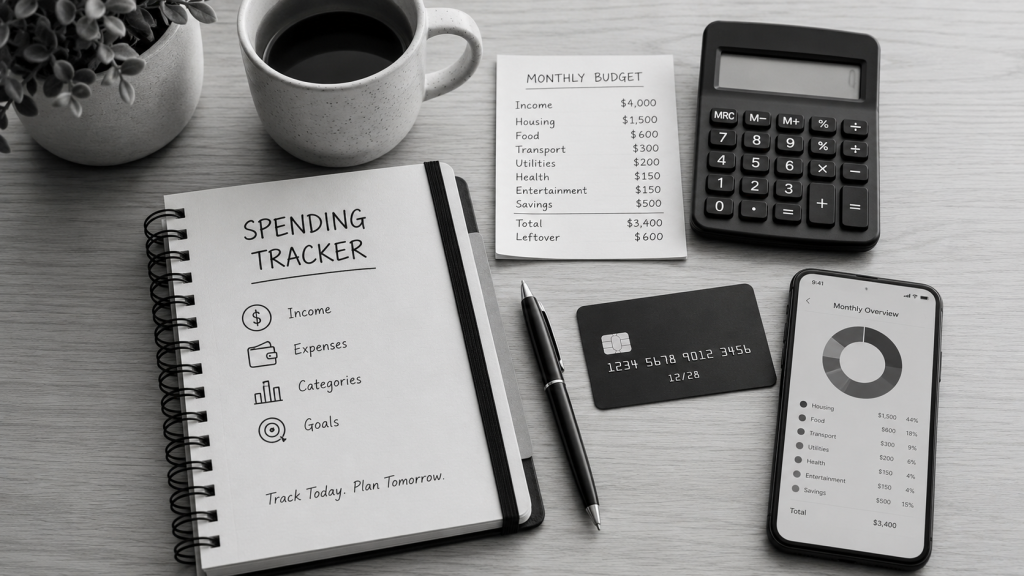
Tracking your spending is one of the easiest ways to understand your money habits. Many people know how much they earn each month, but they do not always know where their money goes.
Small purchases, subscriptions, online shopping, food delivery, coffee, transportation, and entertainment can add up quickly. Without tracking, it is easy to feel like money disappears without a clear reason.
For beginners, spending tracking does not have to be complicated. You do not need a perfect system. You only need a simple way to review your expenses, understand your habits, and make better decisions.
This guide explains how to track your spending step by step.
Why Tracking Spending Matters
Tracking spending matters because it gives you a clear picture of your financial life.
If you do not track spending, it can be hard to know whether you are saving enough, overspending, or using money in ways that do not match your goals.
Tracking your expenses can help you:
- Understand where your money goes
- Find unnecessary spending
- Prepare a better budget
- Avoid overdrafts
- Reduce credit card debt
- Build savings
- Notice subscriptions you forgot about
- Make better financial decisions
The goal is not to feel guilty about every purchase. The goal is to become more aware.
When you know where your money is going, you can decide what to change.
Step 1: Review Your Bank and Card Transactions
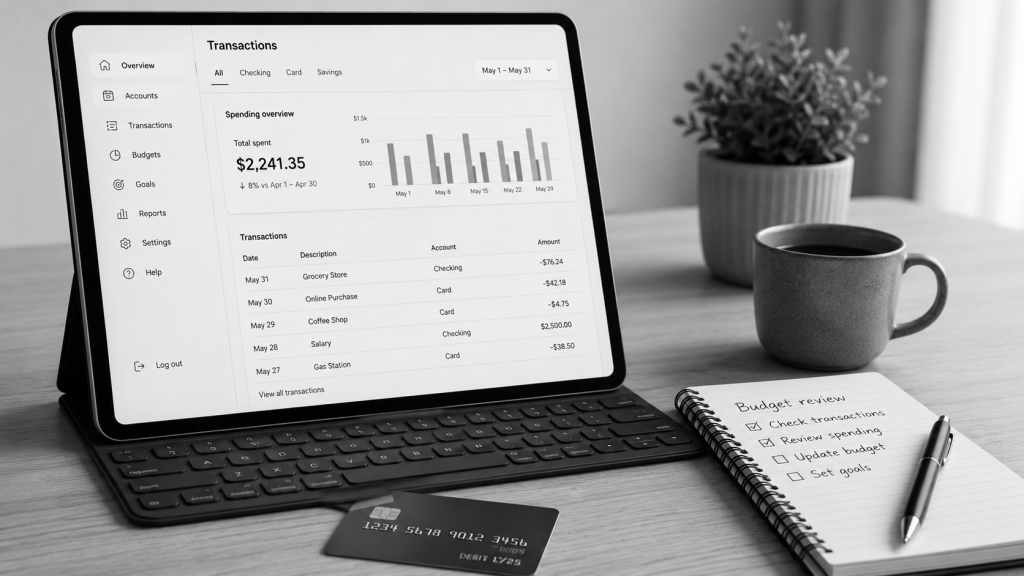
The first step is to review your bank account and card transactions.
Look at your checking account, debit card, credit card, mobile wallet, and payment apps.
Review the last 30 days of transactions.
Pay attention to:
- Groceries
- Restaurants
- Gas or transportation
- Subscriptions
- Online shopping
- Bills
- ATM withdrawals
- Transfers
- Fees
- Entertainment
- Personal care
- Medical expenses
This step helps you see your real spending instead of guessing.
Many beginners underestimate how much they spend because they remember only large purchases and forget small ones.
Your bank and card statements show the truth clearly.
Step 2: Separate Needs and Wants
After reviewing your transactions, separate your spending into needs and wants.
Needs are expenses that are necessary for basic life.
Examples include rent, utilities, groceries, transportation, insurance, phone service, medical needs, and minimum debt payments.
Wants are expenses that are optional or flexible.
Examples include restaurants, entertainment, shopping, subscriptions, hobbies, coffee, travel, and convenience purchases.
This does not mean wants are bad. Everyone needs some enjoyment and flexibility.
The purpose is to understand which expenses are required and which expenses can be adjusted.
If your budget feels tight, wants are usually the first place to review.
Step 3: Use Spending Categories
Spending categories make tracking easier.
Instead of looking at every purchase separately, group expenses into categories.
Common spending categories include:
- Housing
- Utilities
- Groceries
- Transportation
- Insurance
- Debt payments
- Savings
- Restaurants
- Entertainment
- Shopping
- Subscriptions
- Health
- Personal care
- Pets
- Travel
- Miscellaneous
You can create categories that match your life.
For example, if you spend a lot on food delivery, you may want a separate category for delivery apps.
If you have children, you may need a category for childcare or school expenses.
Categories help you see patterns more clearly.
Step 4: Watch Small Purchases
Small purchases can have a big impact on your budget.
A $5 coffee, $12 lunch, $9 subscription, or $20 online order may not feel important at the moment. But repeated many times, these purchases can become a large monthly amount.
For example, spending $10 per day on small extras can become about $300 per month.
This does not mean you must remove every small purchase.
Instead, track them so you can decide which ones are worth keeping.
Some small purchases may make your life better. Others may be habits you barely notice.
Tracking helps you choose intentionally.
Step 5: Track Subscriptions and Recurring Bills
Subscriptions are easy to forget because they charge automatically.
Many people pay for services they no longer use.
Common recurring charges may include:
- Streaming services
- Music apps
- Cloud storage
- Gym memberships
- Software subscriptions
- Meal delivery memberships
- Shopping memberships
- Phone plans
- Insurance payments
- App subscriptions
- Online tools
Review your bank and credit card statements for recurring charges.
Ask yourself:
- Do I still use this?
- Is it worth the cost?
- Can I cancel it?
- Can I switch to a cheaper plan?
- Is there a free alternative?
Canceling unused subscriptions can free up money without changing your daily life very much.
Step 6: Review Your Spending Every Week
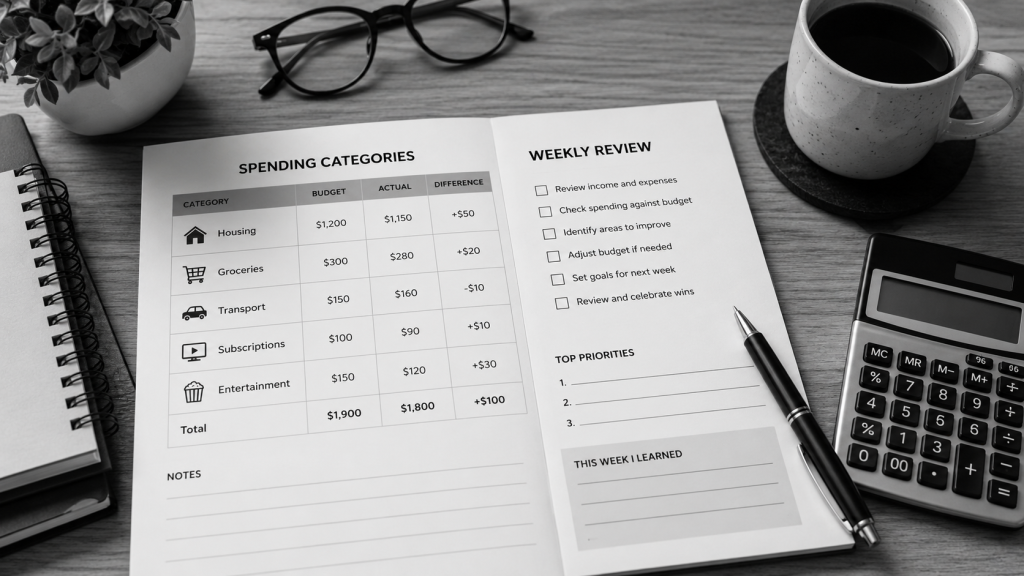
A weekly spending review can help you stay aware before the month ends.
Waiting until the end of the month can make it harder to fix problems.
A simple weekly review may take only 10 to 15 minutes.
During the review, check:
- How much you spent this week
- Which categories were high
- Whether bills were paid
- Whether subscriptions charged
- Whether any transactions look unusual
- Whether you are staying close to your budget
- Whether you need to adjust spending next week
Weekly tracking helps you catch problems early.
For example, if you spent too much on restaurants during the first week, you can reduce food spending for the rest of the month.
A weekly review gives you more control.
Simple Tools You Can Use
You can track spending with many different tools.
You do not need a complicated system.
Simple options include:
- Notebook
- Spreadsheet
- Budgeting app
- Bank app
- Credit card app
- Expense tracker app
- Printable budget sheet
- Notes app on your phone
The best tool is the one you will actually use.
If you like writing things down, a notebook may work well.
If you like numbers and charts, a spreadsheet may be better.
If you prefer automatic tracking, a budgeting app or bank app may help.
The tool matters less than the habit.
Cash Spending vs Card Spending
Card spending is usually easier to track because transactions appear in your account history.
Cash spending can be harder because there may be no automatic record.
If you use cash often, keep receipts or write down purchases right after they happen.
You can also use envelopes or separate cash categories.
For example, you may set a weekly cash amount for food, transportation, or personal spending.
Once the cash is gone, you know the category limit has been reached.
Whether you use cash or cards, the goal is to know where the money went.
How Tracking Helps You Budget Better
Tracking spending and budgeting work together.
A budget is your plan for money.
Spending tracking shows what actually happened.
If your budget says you will spend $400 on groceries but you actually spend $650, tracking helps you notice the difference.
Then you can adjust.
Maybe your grocery budget was too low. Maybe prices increased. Maybe you bought more convenience foods than expected.
Tracking gives you information.
With better information, your budget becomes more realistic.
Common Spending Tracking Mistakes
One common mistake is trying to track everything perfectly from the beginning.
If your system is too complicated, you may stop using it.
Start simple.
Another mistake is only tracking large purchases. Small purchases matter too.
Some beginners also forget to track cash spending.
Another mistake is feeling guilty and quitting when spending is higher than expected.
Tracking is not about shame. It is about awareness.
Some people also forget to review their categories regularly.
Your spending habits may change, so your tracking system may need updates.
How to Reduce Spending Without Feeling Restricted
Once you understand your spending, you can reduce costs in a realistic way.
Start with easy changes.
- Cancel unused subscriptions.
- Limit food delivery.
- Plan grocery trips.
- Compare phone or internet plans.
- Use a shopping list.
- Wait 24 hours before impulse purchases.
- Set a weekly fun-money limit.
- Avoid shopping when bored or stressed.
Choose one or two areas to improve first.
Do not try to cut everything at once.
A spending plan should be realistic enough to follow.
What to Do If Your Spending Is Higher Than Your Income
If your spending is higher than your income, do not ignore it.
This situation can lead to debt, overdrafts, missed payments, and financial stress.
Start by reviewing the biggest categories.
Look at housing, transportation, food, subscriptions, debt payments, and optional spending.
Ask:
- Can I reduce any flexible spending?
- Can I cancel unused services?
- Can I lower any bills?
- Can I pause non-essential purchases?
- Can I increase income?
- Do I need help from a qualified professional?
If the gap is serious, take action early.
A spending problem is easier to fix when you face it quickly.
How to Build a Spending Tracking Habit
Tracking works best when it becomes a routine.
You can choose a regular time each week.
For example, review spending every Sunday evening or every payday.
Keep the process simple.
Check transactions.
Update categories.
Review totals.
Make small adjustments.
Over time, the habit becomes easier.
You do not need to track forever in the same detailed way. But tracking closely for a few months can teach you a lot about your money habits.
Final Thoughts
Tracking your spending is a simple but powerful personal finance habit.
It helps you understand where your money goes, find unnecessary expenses, build a better budget, and make smarter financial choices.
For beginners, the best approach is simple.
Review your bank and card transactions. Separate needs and wants. Use spending categories. Watch small purchases. Track subscriptions. Review your spending every week.
You do not need a perfect system.
You only need a system that helps you stay aware and make better decisions.
Once you understand your spending, you can take more control of your money.
Disclaimer
The information in this article is for educational purposes only and should not be considered financial, legal, tax, credit, loan, or investment advice. Spending habits, budgeting methods, savings strategies, and money management tools may not fit every personal situation. Always review your own income, expenses, obligations, and financial needs before making financial decisions. If you have questions about your personal financial situation, consider speaking with a qualified professional.
Leave a Reply