
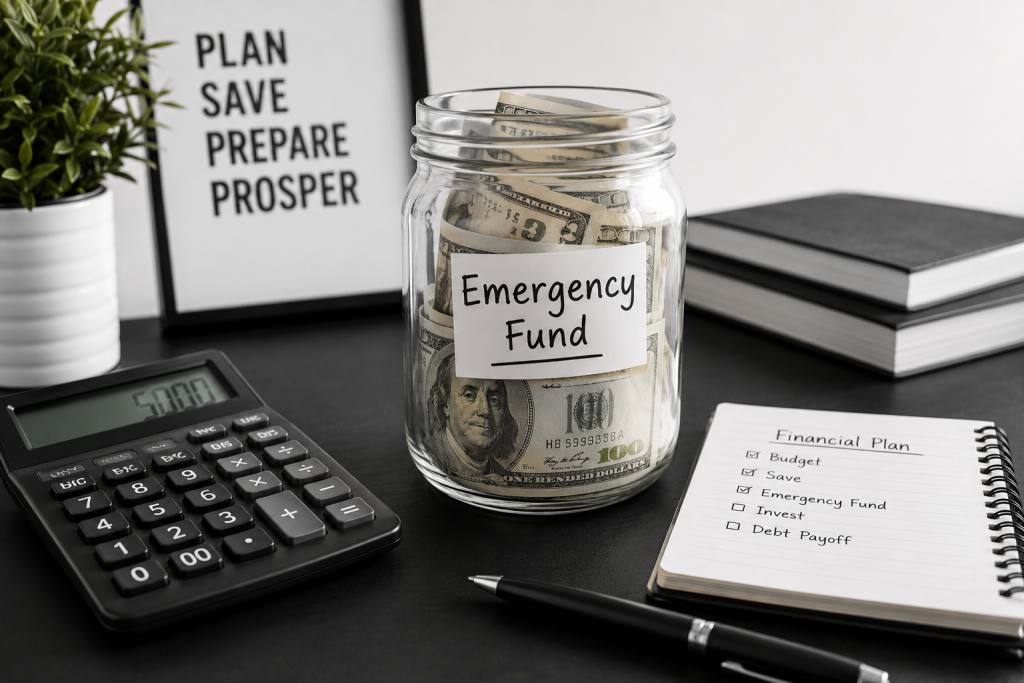
An emergency fund is money set aside for unexpected expenses. It is one of the most important parts of basic personal finance because life does not always go according to plan.
A car repair, medical bill, job loss, urgent travel expense, home repair, or unexpected bill can create financial stress if you are not prepared.
For beginners, building an emergency fund does not have to be complicated. You do not need to save a large amount immediately. The most important step is to start with a realistic goal and build the habit over time.
This guide explains what an emergency fund is, why it matters, how much beginners should save, and where to keep emergency savings.
What Is an Emergency Fund?
An emergency fund is money saved specifically for unexpected financial problems.
It is not the same as regular spending money. It is also not meant for shopping, vacations, entertainment, or impulse purchases.
The purpose of an emergency fund is to give you a financial cushion when something unexpected happens.
For example, if your car breaks down and you need repairs, emergency savings can help cover the cost without immediately using a credit card or loan.
If your income drops suddenly, emergency savings can help you pay basic expenses while you adjust.
An emergency fund gives you more options when life becomes uncertain.
Why Emergency Savings Matter
Emergency savings matter because unexpected costs can happen to anyone.
Without savings, a sudden expense may force you to borrow money, use a credit card, miss bills, or fall behind on payments.
This can create more stress and sometimes lead to long-term debt.
An emergency fund can help you:
- Avoid unnecessary debt
- Cover surprise expenses
- Reduce financial stress
- Protect your monthly budget
- Handle income changes
- Avoid missing important bills
- Feel more prepared
Even a small emergency fund can make a difference.
Having $500 saved can be much better than having nothing saved when an unexpected expense appears.
What Counts as a Real Emergency?
A real emergency is usually something unexpected, necessary, and urgent.
Examples may include:
- Car repairs needed for work
- Medical expenses
- Emergency dental care
- Urgent home repairs
- Temporary job loss
- Unexpected travel for family reasons
- Essential appliance repair
- Emergency pet care
- Sudden income interruption
Not every unexpected expense is a real emergency.
A sale at your favorite store is not an emergency. A vacation is not an emergency. A new phone may not be an emergency unless your current phone is necessary and no longer works.
Before using emergency savings, ask yourself:
- Is this expense necessary?
- Is it urgent?
- Did I plan for this?
- Will delaying it create a bigger problem?
If the answer is yes, it may be a real emergency.
How Much Should Beginners Save First?
Beginners should start with a goal that feels possible.
A large emergency fund can feel overwhelming if you are just starting.
Instead of trying to save several months of expenses immediately, start with a small starter emergency fund.
For many beginners, a first goal may be $500 to $1,000.
This amount may not cover every emergency, but it can help with many smaller unexpected costs.
The first goal is not perfection. The first goal is building the habit of saving.
Once you reach your starter goal, you can continue building toward a larger emergency fund.
The $500 to $1,000 Starter Emergency Fund
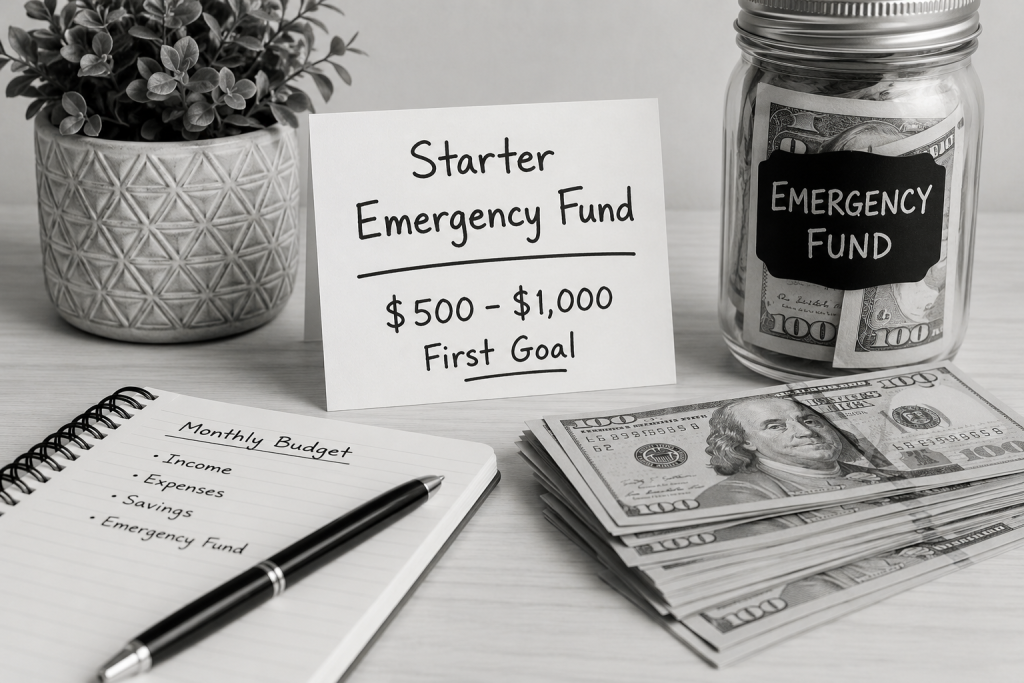
A starter emergency fund is a small amount of money saved for basic unexpected expenses.
A common beginner goal is $500 to $1,000.
This money may help cover things like a minor car repair, urgent bill, medical copay, small home repair, or temporary expense gap.
The reason this goal works well for beginners is that it feels more realistic than trying to save several months of expenses right away.
If you can save $25 per week, you can save about $100 per month.
If you can save $50 per week, you can save about $200 per month.
Small amounts can grow over time.
The most important thing is to save consistently and avoid using the fund for non-emergencies.
Saving Three to Six Months of Expenses
After building a starter emergency fund, many people work toward saving three to six months of essential expenses.
Essential expenses are the costs you must pay to maintain basic life.
These may include:
- Rent or mortgage
- Utilities
- Groceries
- Transportation
- Insurance
- Phone bill
- Minimum debt payments
- Medical needs
- Basic household expenses
For example, if your essential monthly expenses are $2,500, then three months of expenses would be $7,500. Six months would be $15,000.
This goal may take time, and that is normal.
You do not need to reach it immediately.
Start with a smaller goal, then build gradually.
Some people may need more than six months of expenses if their income is unstable, they are self-employed, they support family members, or they work in an unpredictable industry.
Where to Keep Your Emergency Fund
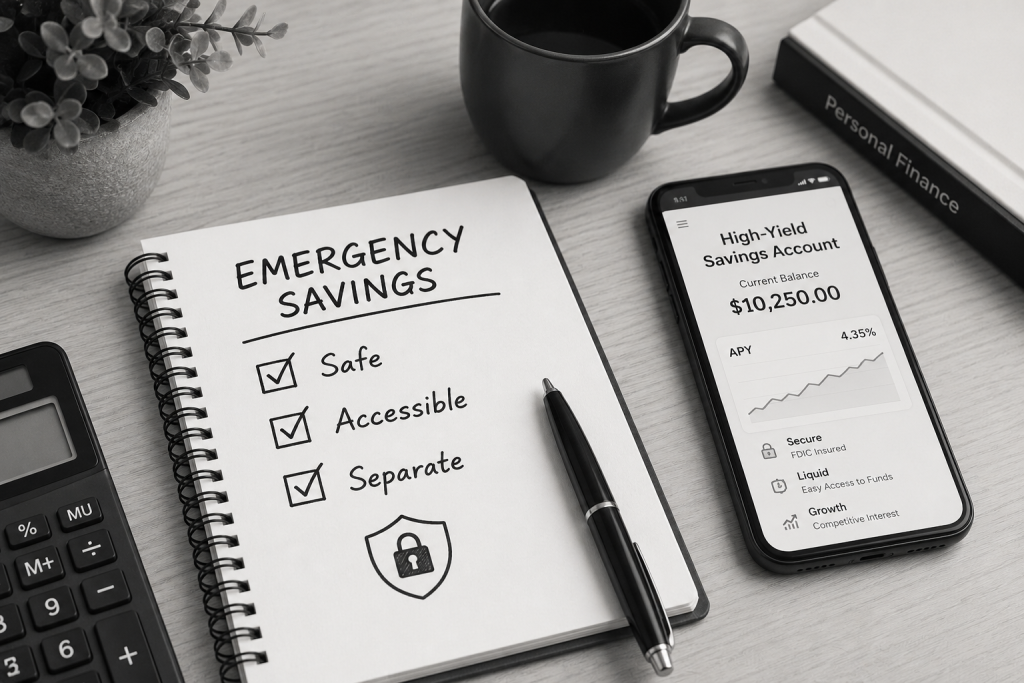
Your emergency fund should be easy to access, but not too easy to spend.
Many people keep emergency savings in a separate savings account.
A separate account can help you avoid accidentally spending the money on daily purchases.
You may consider keeping your emergency fund in:
- A savings account
- A high-yield savings account
- A money market account
- A separate account at your bank or credit union
The account should be safe, simple, and accessible when needed.
Avoid keeping emergency money in risky investments because the value may go down when you need the money.
Also avoid keeping the entire emergency fund in cash at home unless you have a specific reason, because cash can be lost, stolen, or damaged.
For most beginners, a simple savings account is enough.
How to Build an Emergency Fund Step by Step
Building an emergency fund is easier when you make it automatic and realistic.
Step one is to choose a first savings goal.
For example, you might start with $500.
Step two is to decide how much you can save regularly.
This could be $10, $25, $50, or $100 per paycheck.
Step three is to keep the money separate from daily spending.
A separate savings account can help.
Step four is to automate the transfer if possible.
For example, you can set up an automatic transfer from checking to savings after each payday.
Step five is to increase your savings when possible.
If you receive extra income, a bonus, refund, gift, or side job payment, you can add part of it to your emergency fund.
The key is consistency.
You do not need to save a lot at once. You need to keep going.
How to Find Money for Emergency Savings
If saving feels difficult, start by looking at small spending changes.
You may be able to reduce unused subscriptions, food delivery, impulse shopping, expensive convenience purchases, or unnecessary fees.
You can also save small amounts from each paycheck before spending.
Another method is to save money from extra income.
Examples include:
- Tax refunds
- Work bonuses
- Cash gifts
- Side job income
- Selling unused items
- Overtime pay
- Freelance income
Even saving spare change or rounding up purchases can help build momentum.
The goal is to make saving part of your normal routine.
Emergency Fund vs Sinking Fund
An emergency fund is for unexpected expenses.
A sinking fund is for planned future expenses.
For example, car insurance, holiday gifts, school supplies, annual subscriptions, and planned travel are not always emergencies. You can prepare for them in advance.
A sinking fund helps you save little by little for expenses you know are coming.
This is different from an emergency fund.
If you use emergency savings for predictable expenses, the fund may not be available when a real emergency happens.
A good money system can include both emergency savings and sinking funds.
Common Emergency Fund Mistakes
One common mistake is not starting because the goal feels too large.
You do not need thousands of dollars to begin. Start with what you can.
Another mistake is keeping emergency money in the same account as spending money. This makes it easier to spend by accident.
Some beginners use emergency savings for non-emergencies, such as shopping, entertainment, or wants.
Another mistake is investing emergency savings in risky assets. Emergency money should be available when needed.
Some people also forget to rebuild the emergency fund after using it.
If you use emergency savings, make a plan to refill it over time.
When Should You Use Your Emergency Fund?
Use your emergency fund when the expense is urgent, necessary, and unexpected.
Before using the money, ask:
- Is this truly necessary?
- Is this unexpected?
- Do I need to handle it now?
- Can I pay for it another way without creating debt?
- Will this protect my health, income, housing, transportation, or basic needs?
If the expense meets these conditions, using emergency savings may be appropriate.
After using the fund, focus on rebuilding it.
How to Rebuild After an Emergency
If you use your emergency fund, do not feel guilty.
That is what the money is for.
The next step is to rebuild it.
You can rebuild by returning to your regular savings habit.
If possible, temporarily reduce optional spending and put that money back into savings.
You can also add extra income to the fund until it reaches your target again.
Rebuilding may take time, but the important thing is to restart.
An emergency fund is not a one-time goal. It is an ongoing part of financial stability.
Final Thoughts
An emergency fund is one of the most useful financial tools for beginners.
It helps protect you from unexpected expenses, reduces stress, and can prevent the need to rely on credit cards or loans for every surprise cost.
Start with a small goal, such as $500 to $1,000.
After that, work toward saving three to six months of essential expenses if possible.
Keep your emergency fund separate, safe, and easy to access.
You do not need to build it all at once. Small consistent savings can grow over time.
The most important step is to start.
Disclaimer
The information in this article is for educational purposes only and should not be considered financial, legal, tax, credit, loan, or investment advice. Emergency fund goals, savings strategies, and account choices may not fit every personal situation. Always review your own income, expenses, obligations, and financial needs before making financial decisions. If you have questions about your personal financial situation, consider speaking with a qualified professional.
Leave a Reply