
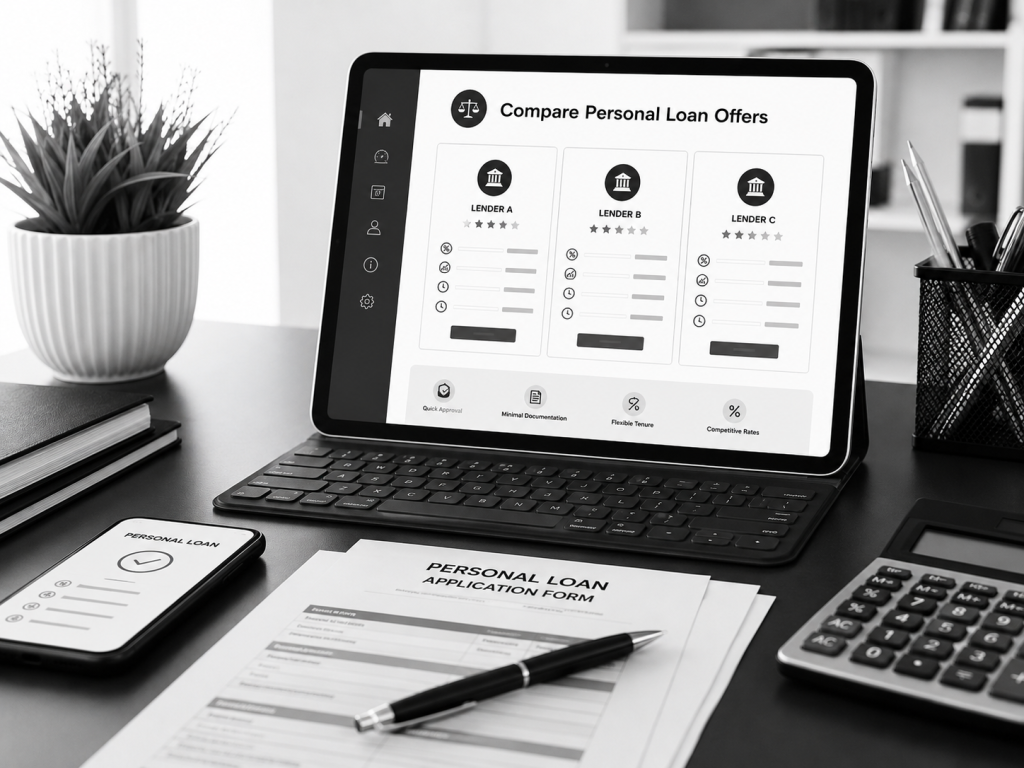
Comparing personal loan offers is one of the most important steps before borrowing money. A loan may look simple at first, but the total cost can be very different from one lender to another.
Some loans may have lower interest rates but higher fees. Some may offer smaller monthly payments but longer repayment terms. Some may look affordable in the beginning but cost more over time.
For beginners, the goal is not only to find a loan that gets approved. The goal is to understand the full cost, compare the details, and choose an option that fits your budget and repayment ability.
This guide explains how to compare personal loan offers before accepting one.
Why Comparing Loan Offers Matters
Not all personal loan offers are the same.
Two lenders may offer the same loan amount, but the monthly payment, APR, fees, repayment period, and total cost may be different.
For example, one lender may offer a lower monthly payment but a longer loan term. Another lender may offer a higher monthly payment but lower total interest.
If you only look at one number, you may miss important details.
Comparing loan offers can help you:
- Understand the real borrowing cost
- Avoid unnecessary fees
- Choose a payment you can afford
- Avoid overly long repayment terms
- Compare lenders more clearly
- Reduce the chance of borrowing mistakes
Taking time to compare offers can help you make a more careful borrowing decision.
Compare APR, Not Just Interest Rate
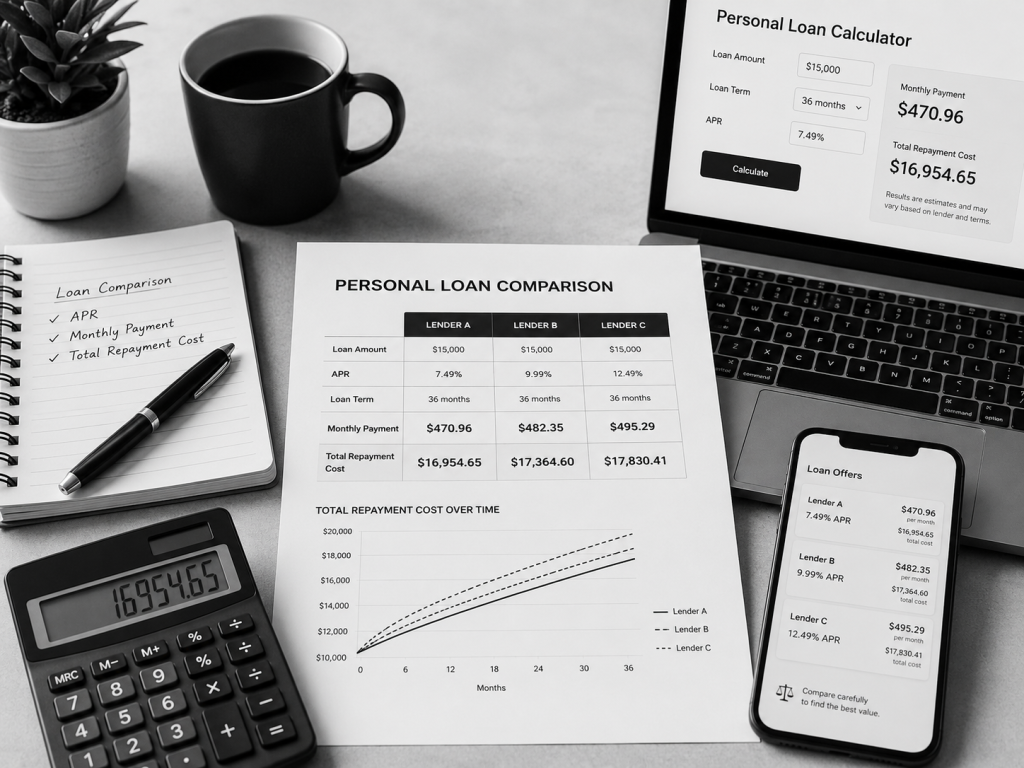
When comparing personal loan offers, look at the APR.
APR stands for Annual Percentage Rate. It gives a broader view of the cost of borrowing because it may include the interest rate and certain fees.
The interest rate shows the cost of borrowing the money itself.
APR may show more of the total yearly cost of the loan.
For beginners, APR is often more useful than the interest rate alone.
For example, one loan may have a 9 percent interest rate but include a large origination fee. Another loan may have a 10 percent interest rate but fewer fees.
The APR can help you compare these offers more fairly.
However, you should still read the loan details because APR may not show every possible cost, such as late fees or optional charges.
Check the Monthly Payment
The monthly payment is the amount you must pay regularly, usually every month.
Before accepting a loan, make sure the monthly payment fits your budget.
A loan payment should not make it hard to pay rent, utilities, food, insurance, transportation, or other necessary expenses.
When checking the monthly payment, ask yourself:
- Can I afford this payment every month?
- Will this payment still be manageable if my expenses increase?
- Do I have emergency savings?
- Will this payment make my budget too tight?
- Can I still pay other debts on time?
A loan that looks affordable for one month may become stressful if the payment is too high for your real budget.
Choose a payment that feels realistic, not just possible.
Understand the Loan Term
The loan term is the length of time you have to repay the loan.
Personal loan terms may range from several months to several years, depending on the lender.
A shorter loan term usually means higher monthly payments but lower total interest.
A longer loan term usually means lower monthly payments but higher total interest over time.
For example, a three-year loan may have a higher monthly payment than a five-year loan, but the total cost may be lower because you are paying interest for a shorter time.
Beginners often focus on the lowest monthly payment. But the lowest monthly payment is not always the cheapest loan.
Always compare the loan term and total repayment cost together.
Look at the Total Repayment Cost
The total repayment cost is the full amount you will pay over the life of the loan.
This includes the amount borrowed, interest, and certain fees.
For example, if you borrow $10,000 but repay $12,000 total over time, the total cost of borrowing is $2,000.
The total repayment cost helps you understand how expensive the loan really is.
When comparing offers, ask:
- How much will I repay in total?
- How much interest will I pay?
- How much are the fees?
- How long will I be paying?
- Is the loan worth the total cost?
A loan with a lower monthly payment can still have a higher total repayment cost if the repayment term is long.
This is why total cost matters.
Watch for Origination Fees
An origination fee is a fee some lenders charge for processing or issuing the loan.
This fee may be deducted from the loan amount or added to the loan cost.
For example, if you borrow $5,000 and the lender charges a 5 percent origination fee, the fee may be $250.
Depending on the lender, you may receive less money than expected after the fee is deducted.
This can be confusing for beginners.
If you need exactly $5,000 and a fee is deducted upfront, you may receive less than $5,000.
Before accepting a loan, check whether there is an origination fee and how it is charged.
Also compare whether the APR includes this fee.
Check Late Fees and Prepayment Penalties
Late fees can apply if you miss a payment or pay after the due date.
These fees can make borrowing more expensive and may also create credit problems if payments are reported late.
Before accepting a loan, check:
- How much is the late fee?
- When does the late fee apply?
- Is there a grace period?
- What happens if I miss multiple payments?
- How are late payments reported?
You should also check for prepayment penalties.
A prepayment penalty is a fee some lenders may charge if you pay off the loan early.
Not all lenders charge this fee, but it is important to check.
If you plan to repay the loan early, a prepayment penalty can reduce the benefit of early repayment.
Compare Secured vs Unsecured Options
Some personal loans are secured, and some are unsecured.
A secured loan requires collateral. Collateral is something valuable, such as a car, savings account, or other asset, that the lender can use as protection if you do not repay.
An unsecured loan does not require collateral.
Secured loans may sometimes have lower rates or easier approval, but they create a risk of losing the collateral if you cannot repay.
Unsecured loans do not require collateral, but they may have higher rates or stricter approval requirements.
Before choosing between secured and unsecured options, understand the risk, cost, and repayment terms.
Do not use collateral unless you understand what could happen if you miss payments.
Review Lender Requirements
Different lenders may have different requirements.
A lender may review your credit score, income, employment, debt-to-income ratio, payment history, bank account information, and other financial details.
Some lenders may have minimum credit score requirements. Others may focus more on income or overall financial profile.
Before applying, check whether the lender lists basic requirements.
This can help you avoid applying for loans that are unlikely to fit your situation.
Also pay attention to whether checking your rate uses a soft credit check or a hard credit check.
A soft check usually does not affect your credit score. A hard check may affect your credit score temporarily.
Always review the lender’s process before submitting an application.
Check Funding Speed and Customer Support
Funding speed may matter if you need money quickly.
Some lenders may fund loans as soon as the same business day or next business day. Others may take several days.
Before accepting an offer, check:
- How long approval may take
- How long funding may take
- Whether funds go to your bank account
- Whether funds go directly to creditors
- Whether there are delays for verification
Customer support is also important.
If you have questions about payments, fees, account access, or payoff options, you need a clear way to contact the lender.
Check whether the lender offers phone support, online chat, email, secure messaging, or account dashboard support.
A loan is a financial agreement that may last for years, so support matters.
Read the Fine Print Before Accepting
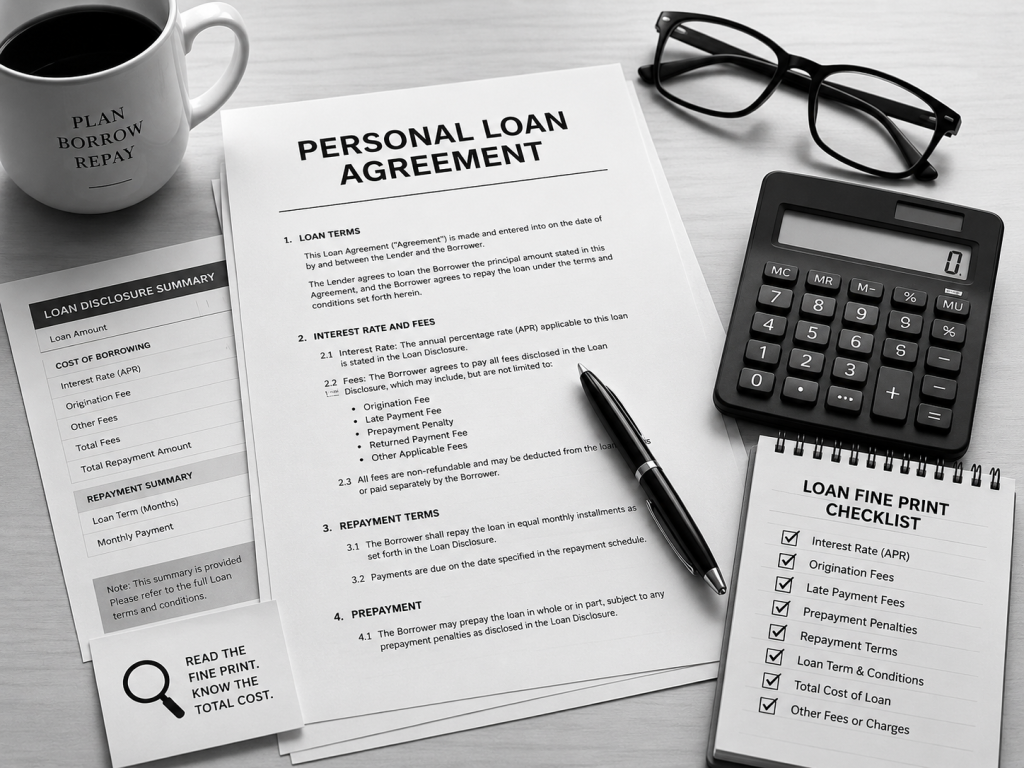
The fine print means the detailed terms and conditions of the loan agreement.
Beginners should not skip this step.
Before accepting a personal loan, read the agreement carefully.
Check:
- APR
- Interest rate
- Loan amount
- Loan term
- Monthly payment
- Payment due date
- Origination fee
- Late payment fee
- Prepayment penalty
- Returned payment fee
- Collateral requirements
- Automatic payment rules
- Credit reporting policy
- Default terms
- Payoff process
If something is unclear, ask the lender before accepting the loan.
Do not sign or accept a loan agreement just because the monthly payment looks acceptable.
The details can affect the full cost and risk of the loan.
Compare More Than One Offer
It is usually smart to compare more than one loan offer.
If you only look at one lender, you may not know whether the offer is competitive.
Comparing multiple offers can help you understand the range of APRs, fees, terms, and monthly payments available to you.
When comparing offers, try to compare the same loan amount and similar loan terms.
For example, comparing a $10,000 loan for three years with another $10,000 loan for three years is easier than comparing loans with different amounts and different repayment periods.
The more similar the offers are, the easier it is to compare the true cost.
Common Mistakes to Avoid
One common mistake is choosing the loan with the lowest monthly payment without checking the total cost.
A lower monthly payment may come from a longer repayment term, which can increase total interest.
Another mistake is ignoring fees. Origination fees, late fees, and other charges can make a loan more expensive.
Some beginners look only at the interest rate and ignore APR.
Another mistake is borrowing more than needed. A larger loan means more debt and possibly more interest.
It is also risky to accept a loan before reading the full agreement.
A personal loan should be used with a clear purpose and repayment plan.
How to Decide Which Offer Is Better
To decide which offer is better, compare the loan based on your needs and budget.
A good offer usually has:
- A reasonable APR
- Affordable monthly payment
- Clear repayment term
- Low or no unnecessary fees
- No confusing conditions
- Reliable lender support
- Terms you fully understand
The cheapest loan is often the one with the lowest total cost, but the best loan also needs to fit your budget.
If the monthly payment is too high, even a low-cost loan can become stressful.
The right loan should balance affordability, total cost, and repayment comfort.
Final Thoughts
Comparing personal loan offers can help you avoid expensive borrowing mistakes.
Before accepting a loan, review the APR, monthly payment, loan term, total repayment cost, origination fee, late fees, prepayment penalties, lender requirements, funding speed, and fine print.
Do not choose a loan only because the payment looks low or the approval seems easy.
A personal loan is a financial responsibility. The best offer is one that you understand clearly and can repay comfortably.
For beginners, the safest approach is simple: compare multiple offers, read the terms carefully, borrow only what you need, and make sure the payment fits your budget.
Disclaimer
The information in this article is for educational purposes only and should not be considered financial, legal, tax, credit, loan, or investment advice. Personal loan rates, APRs, fees, repayment terms, approval requirements, funding times, and lender policies may change over time. Always review the official loan agreement and disclosures from the lender before applying for or accepting any loan. If you have questions about your personal financial situation, consider speaking with a qualified professional.
Leave a Reply