
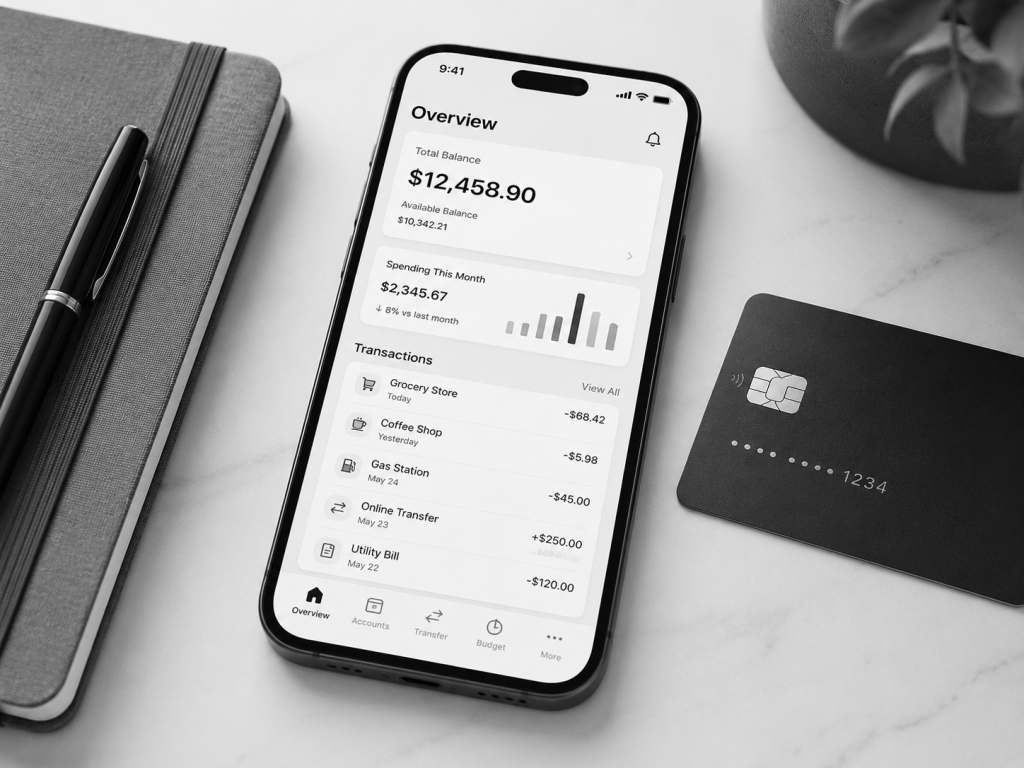
Banking apps have become an important part of everyday money management. Many people now use their phones to check balances, pay bills, transfer money, deposit checks, lock debit cards, review transactions, and receive account alerts.
For beginners, a good banking app can make financial life easier. Instead of visiting a branch or waiting on hold, you can manage many banking tasks from your phone.
But not every banking app is the same.some apps are simple and easy to use. Others may have more features but feel confusing. Some banks offer strong mobile tools, while others may still depend more on branch service or desktop banking.
This beginner-friendly review explains what to look for when comparing banking apps in the USA in 2026.
Why Banking Apps Matter
A banking app is more than just a place to check your balance.
For many people, it is the main way they interact with their bank.
A good banking app can help you:
- Check account balances
- Review recent transactions
- Transfer money
- Pay bills
- Deposit checks
- Find ATMs
- Lock or unlock debit cards
- Set account alerts
- Manage savings goals
- Contact customer support
- Monitor suspicious activity
If the app is difficult to use, slow, or unreliable, everyday banking can become frustrating.This is why choosing a bank with a strong mobile app can be important, especially if you prefer online banking.
What Makes a Good Banking App?
A good banking app should be simple, secure, reliable, and easy to understand.Beginners should not need advanced financial knowledge just to use basic features.
A good app should make it easy to see your account balance, understand recent activity, move money, pay bills, and protect your account.
Important features to compare include:
- Ease of use Login security
- Money transfers
- Debit card controls
- Account alerts
- Customer support
- ATM locator
- Fee transparency App reliability
- Mobile check deposit
- Bill pay
The best banking app is not always the one with the most features. It is the one that helps you manage your money clearly and safely.
Easy Account Access
One of the most important features of a banking app is easy account access.You should be able to open the app, log in securely, and quickly see your account balances.
A beginner-friendly app should clearly show:
- Checking account balance
- Savings account balance
- Pending transactions
- Recent deposits
- Recent withdrawals
- Available balance
- Account details
The app should also make it clear which transactions are pending and which have already posted.This matters because your available balance may be different from your current balance if some transactions have not fully processed yet.A clear app can help you avoid confusion and reduce the chance of overspending.
Mobile Check Deposit
Mobile check deposit is a useful feature that allows you to deposit a paper check using your phone.Instead of visiting a bank branch or ATM, you can usually take pictures of the front and back of the check through the banking app.
This feature can be helpful if you receive paper checks from work, clients, family, refunds, or other sources.
Before relying on mobile check deposit, check:
- Whether the app supports it
- Deposit limits
- Processing times
- Hold periods
- Photo quality requirements
When funds become availablesome banks may place a temporary hold on mobile check deposits. This means the money may not be available immediately.
A good banking app should explain deposit status clearly.
Bill Pay and Transfers
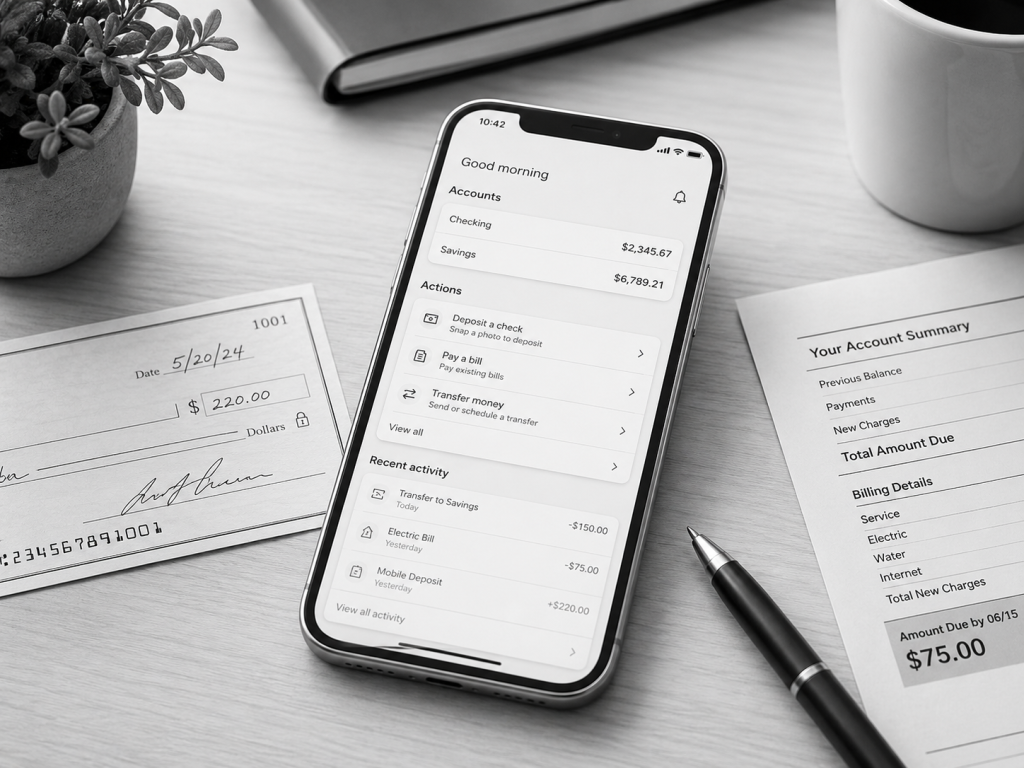
A strong banking app should make it easy to pay bills and transfer money.
Bill pay allows you to pay regular expenses through your bank app. This may include rent, utilities, phone bills, credit card bills, insurance, loans, or other payments.Transfer features may allow you to move money between your own accounts or send money to another person or financial institution.When comparing
banking apps, check whether the app supports:
- Internal transfers
- External transfers
- Scheduled transfers
- Recurring transfers
- Bill pay
- Payment reminders
- Transfer status tracking
- Direct deposit information
A useful banking app should make payments and transfers simple, but also clear enough that you do not accidentally send money to the wrong place.
Debit Card Controls
Debit card controls are very useful for beginners.Many modern banking apps allow you to lock or unlock your debit card directly from the app. This can help if your card is lost, stolen, or temporarily misplaced.Some apps may also let you:
- Report a lost card
- Request a replacement card
- Set spending limits
- Turn on travel notices
- Manage ATM access
- Control online purchases
- View card details
- Add the card to a mobile wallet
Debit card controls can make your banking experience safer and more convenient.If you misplace your card, being able to lock it quickly can reduce risk while you look for it.
Security Features
Security is one of the most important parts of any banking app.
A good banking app should help protect your account and personal information.Useful security features may include:
- Two-factor authentication
- Face ID or fingerprint login
- Strong password requirements
- Login alerts
- Transaction alerts
- Debit card lock
- Fraud monitoring
- Secure messaging
- Automatic logout
- Device management
Two-factor authentication is especially important. It adds another step to the login process, such as a code, push notification, or authentication method.A banking app should also make it easy to update your password, review security settings, and contact support if something looks suspicious.
Account Alerts and Notifications
Account alerts can help you monitor your money.
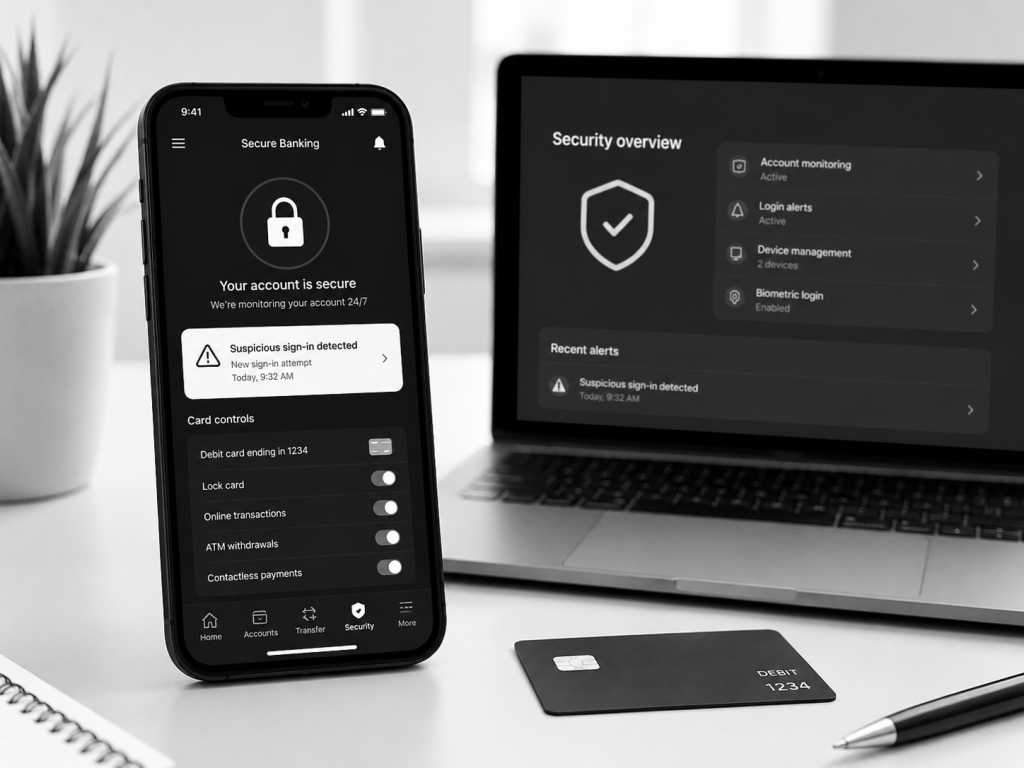
Many banking apps allow you to receive alerts by push notification, text message, or email.Useful alerts may include:
- Low balance alerts
- Large purchase alerts
- ATM withdrawal alerts
- Debit card transaction alerts
- Direct deposit alerts
- Transfer alerts
- Bill due alerts
- Password change alerts
- Login alerts
- Suspicious activity alerts
For beginners, alerts can be very helpful because they make it easier to notice account activity quickly.For example, if your debit card is used unexpectedly, an alert can help you respond faster.
Alerts can also help you avoid overdrafts by warning you when your balance is low.
Customer Support
Customer support matters, especially when using an online or mobile-first bank.If something goes wrong, you need a clear way to get help.A good banking app may offer:
- In-app chat
- Secure messaging
- Phone support
- Help center articles
- Lost card support
- Fraud reporting
- Branch appointment scheduling
- Support ticket tracking
Beginners should check whether support is easy to find inside the app.Some apps look modern but make customer support hard to reach. This can be frustrating if your account is locked, your deposit is delayed, or you notice suspicious activity.
A strong banking app should not only look good. It should also help you solve problems.Fees and Account Requirements
A banking app may be easy to use, but you should still review the account fees and requirements.The app is only one part of the banking experience. The account behind the app matters too.
Before opening an account, check:
- Monthly maintenance fees
- Minimum balance requirements
- Overdraft fees
- ATM fees
- Wire transfer fees
- Foreign transaction fees
- Paper statement fees
- Account closing fees
- Cash deposit fees
Deposit requirements
Some banks offer excellent apps but may charge fees that do not fit your needs.Other banks may have fewer fees but a simpler app.
The best choice depends on your priorities.For beginners, a good balance is usually low fees, simple account terms, and an app that is easy to use.
Online Banks vs Traditional Bank Apps
Both online banks and traditional banks may offer banking apps.
Online banks usually focus heavily on digital banking. Their apps may be designed as the main banking experience.
Traditional banks may offer both branch service and mobile app service. This can be useful if you want the option to visit a physical branch.Online bank apps may be attractive for people who are comfortable managing money digitally.Traditional bank apps may be better for people who want mobile banking but still need branch access, cash deposits, or in-person help.
Neither option is automatically better.The right choice depends on how you use your bank.If you rarely use cash and prefer mobile tools, an online bank app may work well.If you often deposit cash or want face-to-face support, a traditional bank app connected to a branch network may be more practical.
Ease of Use for Beginners
For beginners, ease of use is very important.A banking app should not feel confusing.You should be able to quickly find basic features like balances, transactions, transfers, bill pay, card controls, alerts, and support.A beginner-friendly app usually has:
- Clean design
- Simple navigation
- Clear labels
- Easy login
- Easy transaction search
- Helpful notifications
- Simple transfer steps
- Clear fee and account information
If an app is difficult to understand, it can lead to mistakes.Before choosing a bank, it may help to read app reviews and look for common complaints about bugs, login problems, slow updates, or confusing design.
Reliability and App Reviews
App reliability matters because banking is something people need regularly.A banking app should work when you need it.When comparing banking apps, pay attention to reviews that mention:
- App crashes
- Login problems
- Deposit issues
- Slow transfers
- Delayed notifications
- Poor customer support
- Card control problems
- Security concerns
- Update problems
No app is perfect, and every bank may have some negative reviews.But if many users complain about the same issue, that is worth noticing.A reliable banking app should make everyday banking easier, not more stressful.
How Beginners Should Choose a Banking App
Beginners should choose a banking app based on real needs, not just advertising.Start by asking yourself:
- Do I need a checking account?
- Do I need a savings account?
- Do I deposit cash often?
- Do I need mobile check deposit?
- Do I want low fees?
- Do I need branch access?
- Do I want strong debit card controls?
- Do I need good customer support?
- Do I prefer simple design?
- Do I want savings goals or budgeting tools?
Once you know what matters to you, compare banks based on those needs.A good beginner banking app should be safe, simple, reliable, and connected to an account with clear terms.
Common Mistakes to Avoid
One common mistake is choosing a bank only because the app looks modern.A beautiful app does not always mean the account has low fees or good support.Another mistake is ignoring customer service reviews. If support is poor, solving account problems can be difficult.Some beginners also forget to check ATM access, cash deposit options, or transfer limits.
Another mistake is not setting up security features after opening an account.A banking app is most useful when you turn on alerts, use a strong password, enable two-factor authentication, and review your transactions regularly.
Final Thoughts
Banking apps can make money management easier, faster, and more convenient.A good banking app can help you check balances, pay bills, transfer money, deposit checks, lock your debit card, receive alerts, and monitor your account from your phone.But beginners should compare more than the app design.
Before choosing a banking app, review account fees, security features, customer support, ATM access, mobile deposit, transfer tools, debit card controls, and overall reliability.The best banking app is the one that fits your daily habits, protects your account, and helps you manage money with confidence.
Disclaimer
The information in this article is for educational purposes only and should not be considered financial, legal, cybersecurity, tax, credit, or investment advice. Banking app features, account fees, security tools, deposit insurance coverage, requirements, interest rates, support options, and terms may change over time. Always review the official terms, disclosures, and security information from the financial institution before opening or using any bank account or banking app. If you have questions about your personal financial situation, consider speaking with a qualified professional.
Leave a Reply