
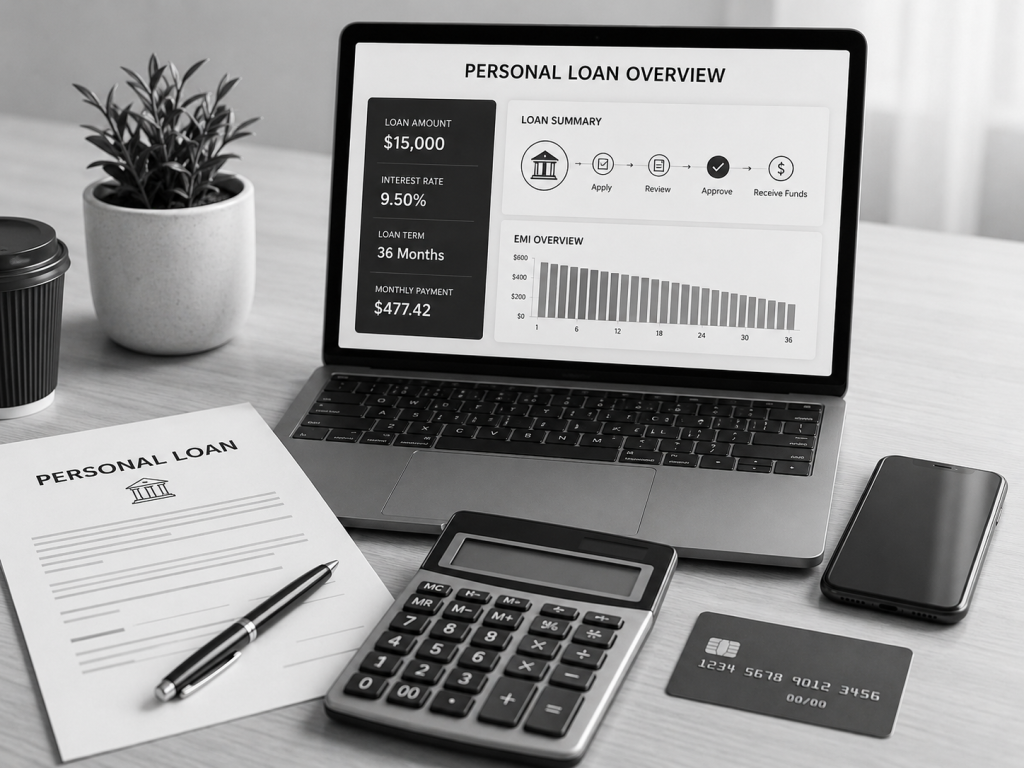
A personal loan is a type of loan that allows you to borrow money from a bank, credit union, or online lender and repay it over time with regular payments.
Many people use personal loans for planned expenses, emergency costs, debt consolidation, home repairs, medical bills, moving costs, or other personal financial needs.
For beginners, personal loans may seem simple, but it is important to understand how they work before applying. A loan is not free money. It is borrowed money that must be repaid, usually with interest and sometimes with fees.
Understanding personal loans can help you compare offers, avoid expensive mistakes, and make better borrowing decisions.
What Is a Personal Loan?
A personal loan is money borrowed from a lender for personal use.
In most cases, the lender gives you a fixed amount of money, and you agree to pay it back over a set period of time.
This repayment period is called the loan term.
For example, if you borrow $5,000 with a three-year loan term, you may make monthly payments until the loan is fully repaid.
Personal loans are often installment loans. This means you repay the loan through scheduled payments, usually monthly.
Each payment may include part of the amount you borrowed plus interest.
How a Personal Loan Works
A personal loan usually works in several steps.
First, you apply with a lender. The lender may review your income, credit history, debt, employment, and other financial information.
If approved, the lender offers loan terms. These may include the loan amount, interest rate, APR, monthly payment, repayment period, and fees.
If you accept the offer, the lender sends the money to you or to another account, depending on the purpose of the loan.
Then you begin making payments according to the loan agreement.
Your payment schedule may be monthly, and you are expected to pay on time until the loan is fully paid off.
If you miss payments, you may face late fees, credit score damage, collection activity, or other consequences.
Common Uses for Personal Loans
People use personal loans for many different reasons.
Common uses may include:
- Debt consolidation
- Medical expenses
- Home repairs
- Car repairs
- Moving costs
- Wedding expenses
- Emergency expenses
- Large purchases
- Travel expenses
- Unexpected bills
Debt consolidation is one common reason. This means using a personal loan to combine multiple debts into one payment.
For example, someone may use a personal loan to pay off several high-interest credit card balances. Then they repay one loan instead of managing multiple card payments.
However, debt consolidation only helps if the borrower avoids creating new debt and can manage the loan payments responsibly.
Secured vs Unsecured Personal Loans
Personal loans can be secured or unsecured.
A secured personal loan requires collateral. Collateral is something valuable that the lender can use as protection if the borrower does not repay the loan.
Examples of collateral may include a vehicle, savings account, or other asset, depending on the lender.
An unsecured personal loan does not require collateral. Instead, the lender usually relies more on your credit, income, debt level, and financial profile.
Many personal loans are unsecured.
Unsecured loans may be easier because you do not need to provide collateral, but they may have higher interest rates than secured loans, depending on your credit and lender.
Before choosing any loan, understand whether it is secured or unsecured and what risks are involved.
Interest Rates and APR
Interest is the cost of borrowing money.
When you take a personal loan, the lender may charge interest on the amount you borrow.
The interest rate affects how much you pay over time.
APR stands for Annual Percentage Rate. APR may include the interest rate and certain fees, giving a broader view of the cost of the loan.
When comparing personal loans, APR is often more useful than interest rate alone because it can show more of the total borrowing cost.
For example, one loan may have a lower interest rate but higher fees. Another loan may have a slightly higher interest rate but fewer fees.
Looking at APR can help you compare offers more clearly.
Loan Terms and Monthly Payments
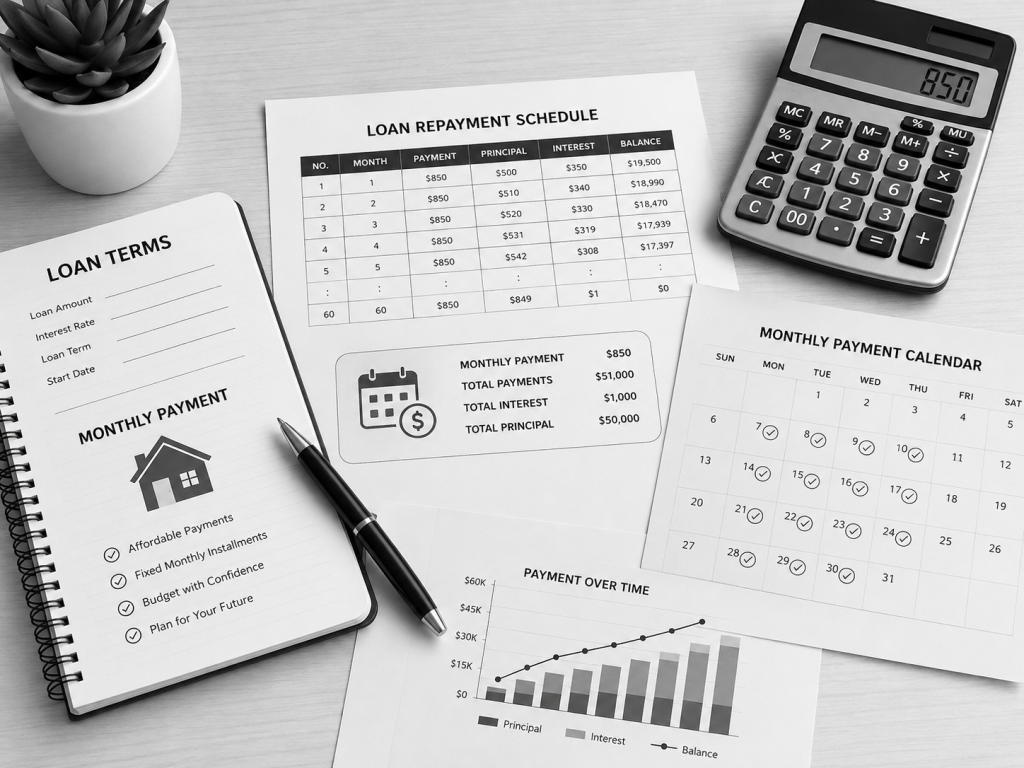
The loan term is the length of time you have to repay the loan.
Common personal loan terms may range from a few months to several years, depending on the lender and loan type.
A shorter loan term usually means higher monthly payments but less total interest over time.
A longer loan term usually means lower monthly payments but more total interest over time.
For example, if you borrow the same amount of money, a five-year loan may have a lower monthly payment than a two-year loan. But because you are paying for a longer time, the total cost may be higher.
Before accepting a loan, make sure the monthly payment fits your budget.
A payment that looks manageable at first can become stressful if your income changes or other expenses increase.
Common Personal Loan Fees
Personal loans may include fees.
Not every lender charges the same fees, so beginners should review the loan terms carefully.
Common fees may include:
- Origination fees
- Late payment fees
- Prepayment penalties
- Returned payment fees
- Application fees
- Processing fees
An origination fee is a fee some lenders charge for processing the loan. It may be taken out of the loan amount or added to the cost.
A late payment fee may apply if you do not make your payment on time.
A prepayment penalty is a fee some lenders may charge if you pay off the loan early. Not all lenders charge this, but it is important to check.
Before accepting a personal loan, review all fees and understand how they affect the total cost.
Personal Loan Pros and Cons
Personal loans can be useful, but they are not always the right choice.
Possible benefits include:
- Fixed monthly payments
- Predictable repayment schedule
- Can be used for many purposes
- May help consolidate debt
- May have lower rates than some credit cards
- Can provide quick access to funds
Possible drawbacks include:
- Interest costs
- Possible fees
- Monthly payment obligation
- Risk of late payment penalties
- Possible credit score impact
- Risk of borrowing more than needed
- Debt can become harder to manage
A personal loan can help in some situations, but it should be used carefully.
Borrowing money creates responsibility. Before applying, make sure you understand the loan and have a realistic repayment plan.
What to Check Before Applying
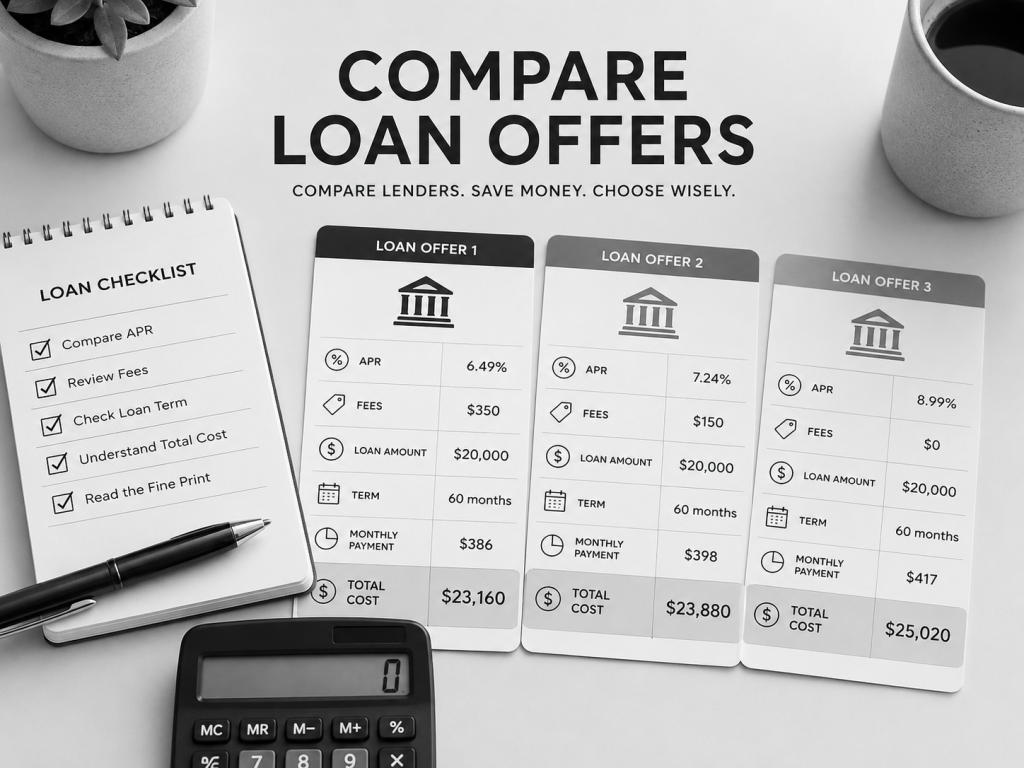
Before applying for a personal loan, compare several important details.
Check the loan amount. Make sure you are not borrowing more than you actually need.
Check the APR. This helps you understand the cost of borrowing.
Check the monthly payment. Make sure it fits your budget.
Check the loan term. Understand how long you will be making payments.
Check all fees. Look for origination fees, late fees, and prepayment penalties.
Check whether the loan is secured or unsecured.
Check the lender’s reputation, customer support, and account management tools.
Also review the full loan agreement before accepting.
Do not rely only on advertisements. A loan offer may look attractive, but the details matter.
Common Beginner Mistakes to Avoid
One common mistake is borrowing more money than needed.
A larger loan may seem helpful at first, but it also means more debt and possibly more interest.
Another mistake is focusing only on the monthly payment. A low monthly payment can look comfortable, but if the loan term is long, the total cost may be higher.
Some beginners ignore fees. Fees can make a loan more expensive than it first appears.
Another mistake is applying without checking the budget. If the monthly payment does not fit your income and expenses, the loan can become stressful.
It is also risky to use a personal loan for unnecessary spending without a repayment plan.
Before borrowing, ask yourself why you need the loan, how much you need, and how you will repay it.
Personal Loan vs Credit Card
A personal loan and a credit card are both ways to borrow money, but they work differently.
A personal loan usually gives you a lump sum of money with a fixed repayment schedule.
A credit card gives you revolving credit, meaning you can borrow, repay, and borrow again up to your credit limit.
Personal loans may be useful for one-time expenses or debt consolidation.
Credit cards may be useful for smaller purchases, short-term spending, or rewards, but carrying a balance can become expensive if the APR is high.
The better option depends on your situation, cost, repayment ability, and borrowing purpose.
When a Personal Loan May Not Be a Good Idea
A personal loan may not be a good idea if you cannot afford the monthly payment.
It may also not be a good idea if you are borrowing for unnecessary spending, gambling, risky investments, or expenses that do not fit your budget.
A personal loan may also be risky if you plan to use it to pay off credit cards but continue using the cards heavily afterward. This can create more debt instead of solving the problem.
Borrowing should be connected to a clear purpose and realistic repayment plan.
How to Use a Personal Loan Responsibly
If you decide to use a personal loan, use it carefully.
Borrow only what you need.
Compare multiple lenders.
Understand the APR and fees.
Choose a repayment term that fits your budget.
Make payments on time.
Avoid taking on new debt without a plan.
Keep records of your loan agreement and payment schedule.
A personal loan should support your financial plan, not create more pressure.
Final Thoughts
A personal loan is a borrowing tool that allows you to receive money upfront and repay it over time through scheduled payments.
It can be useful for debt consolidation, emergency expenses, home repairs, medical costs, or other financial needs.
But personal loans come with interest, fees, and repayment responsibility.
Before applying, compare APR, fees, loan terms, monthly payments, lender reputation, and repayment requirements.
For beginners, the best approach is simple: borrow only what you need, understand the full cost, and make sure the payment fits your budget.
Disclaimer
The information in this article is for educational purposes only and should not be considered financial, legal, tax, credit, loan, or investment advice. Personal loan rates, fees, terms, approval requirements, repayment conditions, and lender policies may change over time. Always review the official terms and disclosures from the lender before applying for or accepting any loan. If you have questions about your personal financial situation, consider speaking with a qualified professional.
Leave a Reply